Commercial industrial roofing Scottsdale, AZ has to survive triple-digit summers, flash monsoon downpours, and rooftop equipment loads that a residential shingle roof was never built to handle. Building owners who wait for a visible ceiling stain almost always pay more than those who understand their system, their real cost range, and their contractor's track record before signing anything. This guide breaks down the roofing systems, 2026 cost ranges, failure points, and vetting questions specific to Scottsdale's commercial and industrial properties, straight from the crews at AIM Services Roofing.
What Makes Commercial & Industrial Roofing Different in Scottsdale?
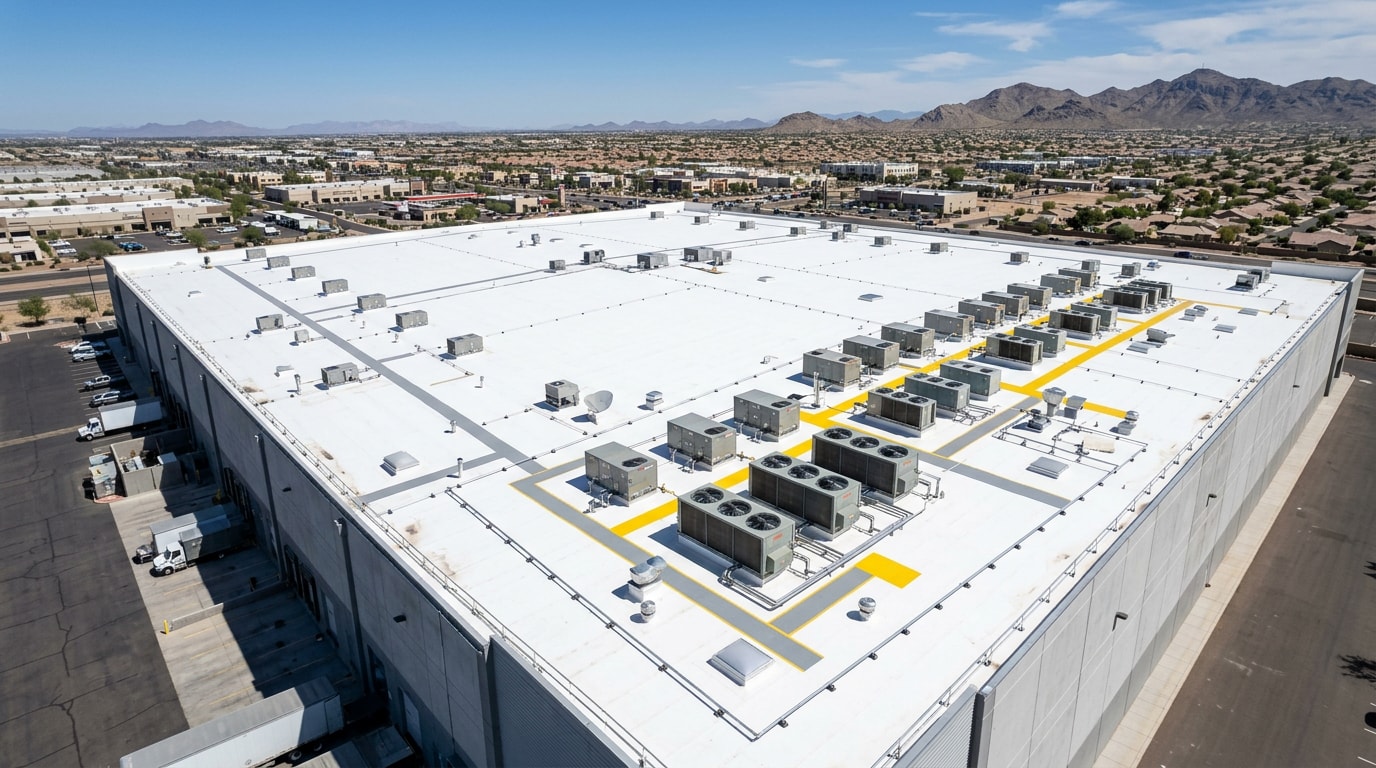
These roofs support rooftop HVAC units, vents, skylights, heavier foot traffic, and custom drainage systems that residential shingles were never built to handle. A warehouse or retail center roof functions as a working platform, not just a protective layer.
Scottsdale adds its own stress test. Intense UV radiation, bone-dry heat, and sudden monsoon downpours all hit the same membrane within a single year. Add load-bearing stress from solar arrays and HVAC equipment, plus strict local code compliance, and it becomes clear why a specialized commercial roofing contractor matters more here than in milder climates.
Common Commercial & Industrial Roofing Systems in Scottsdale
Scottsdale's flat and low-slope commercial buildings rely on a handful of proven systems. Each one trades off cost, lifespan, and heat performance differently, so matching the right roofing material to your building matters as much as the installation itself.
TPO & PVC Roofing
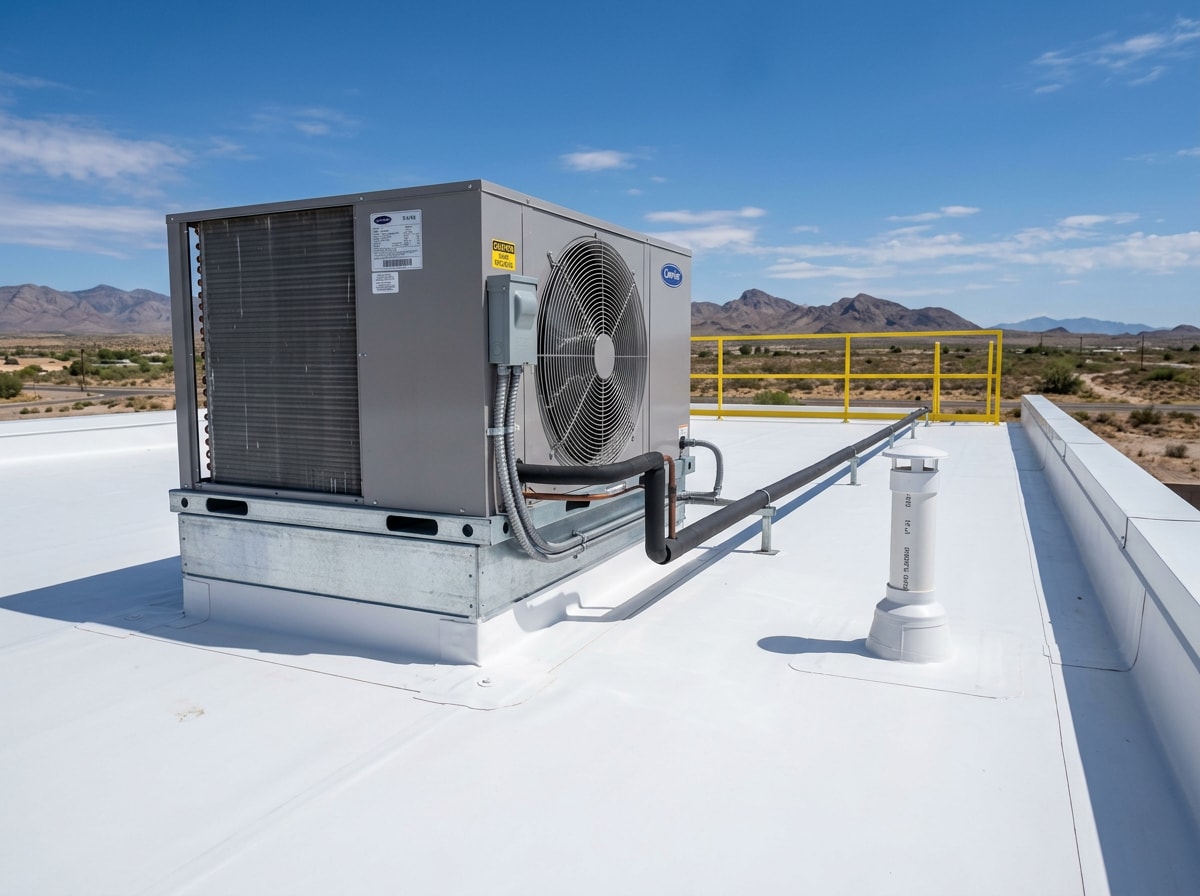
TPO is a cost-effective single-ply membrane that reflects UV rays and keeps buildings cooler, making it one of the most common flat roof materials Scottsdale property owners install. PVC is a chemically resistant cousin of TPO, often chosen for industrial sites exposed to grease, oils, or chemical runoff. The main practical difference: PVC costs more but holds up better around solvents and kitchen exhaust, while TPO wins on price for standard retail and office buildings.
Both systems typically last 15 to 25 years with proper maintenance. TPO remains the single most common replacement choice for flat roofs in the region.
Modified Bitumen (ModBit)
Modified bitumen roofing is durable and layered for maximum water resistance, which is why it still shows up often on industrial spaces with heavy rooftop traffic. Mod bit systems combine asphalt with rubber or plastic modifiers, applied in multiple plies for redundancy.
The tradeoff is heat. Dark modified bitumen surfaces absorb Scottsdale's sun and age faster than reflective membranes, so most contractors now add a white or aluminized cool coating to extend the membrane's service life.
Spray Foam Roofing (SPF)
Spray foam roofing creates a seamless, insulating, waterproof barrier in one application, with no seams to fail. SPF also fills in low spots that cause ponding, though the foam needs a fresh protective recoat roughly every 10 to 15 years. See our foam roofing systems for details on installation and recoat schedules.
The energy case is well documented. A cool roof is made of a material or has a coating that lowers the roof surface temperature, decreasing the amount of heat that passes into a home or commercial building , according to ENERGY STAR. In a city with 115°F summers, that reduction in heat transfer adds up fast on a cooling bill.
Metal Roofing
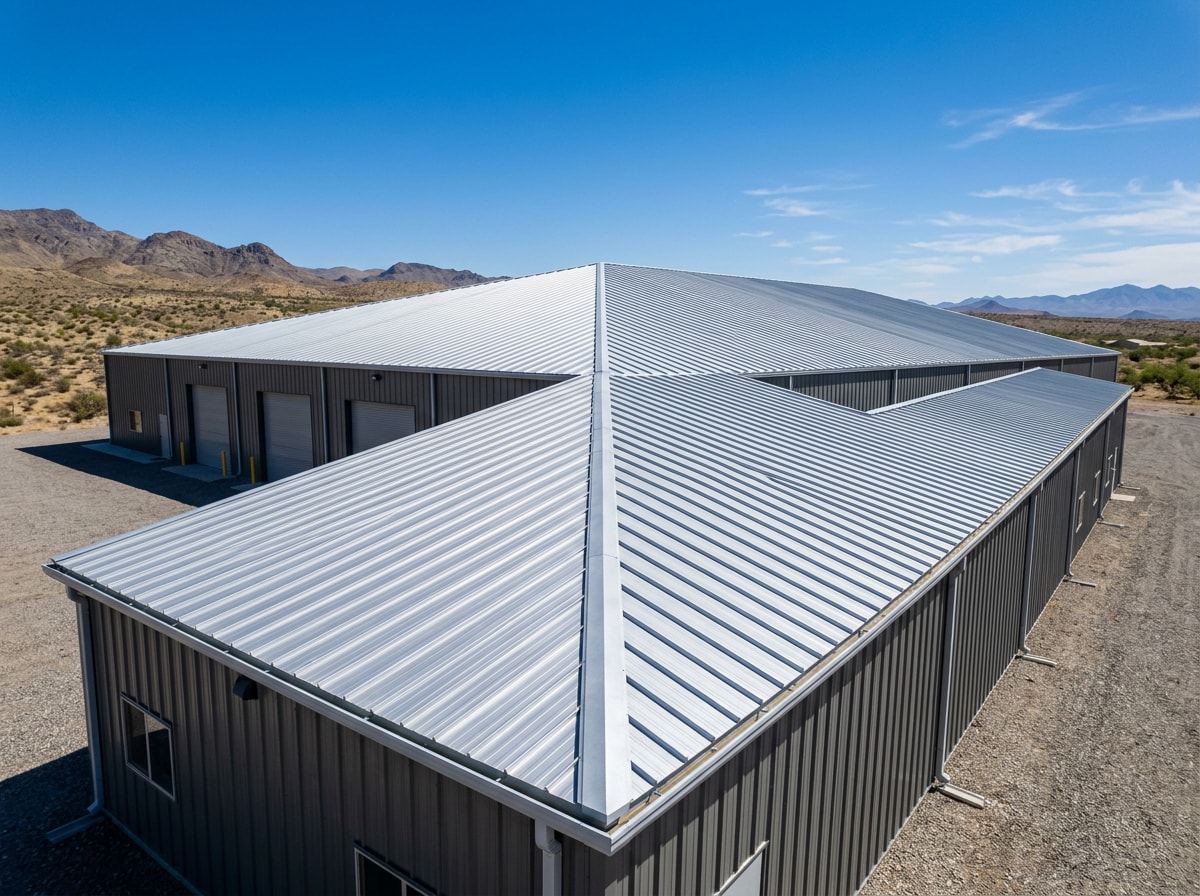
Metal roofing shows up frequently on retail buildings and warehouse-style properties across Scottsdale. Standing seam panels resist wind uplift and shed monsoon rain efficiently, and a well-installed metal roofing system can outlast every other system on this list. The upfront cost runs higher than single-ply membranes, which is the main reason it isn't universal on smaller commercial buildings.
Built-Up Roofing (BUR) & EPDM Rubber Roofing
Built-up roofing is a multi-layered hot asphalt system still found on older Scottsdale commercial buildings, built from alternating layers of asphalt and reinforcing fabric topped with gravel or a cap sheet. It's heavy and durable but labor-intensive to install.
EPDM rubber roofing offers a lighter-weight, flexible alternative that resists UV exposure and temperature swings well. It's still used on some industrial facilities, particularly where budget matters more than reflectivity.
Common Commercial Roof Problems in Scottsdale
Scottsdale's climate is unusually hard on commercial roofing. Here's what drives most of the repair calls we see:
- Summers above 115°F baking membranes daily
- Year-round UV exposure drying out protective oils
- Sudden monsoon storms and microbursts overwhelming drainage
- Constant thermal expansion and contraction stressing seams
- Dust storms abrading surface coatings
- Flat roof designs that hold water when drainage fails
UV Damage & Membrane Cracking
Scottsdale's intense sun is a leading cause of premature commercial roof aging. Continuous UV exposure dries out membrane oils, causing material to crack, chalk, and lose flexibility, while seams and welds weaken as the membrane expands and contracts daily under extreme heat swings. Think of it like a rubber band left in direct sun for years — it stiffens, cracks, and eventually snaps instead of flexing.
Ponding Water on Flat Roofs
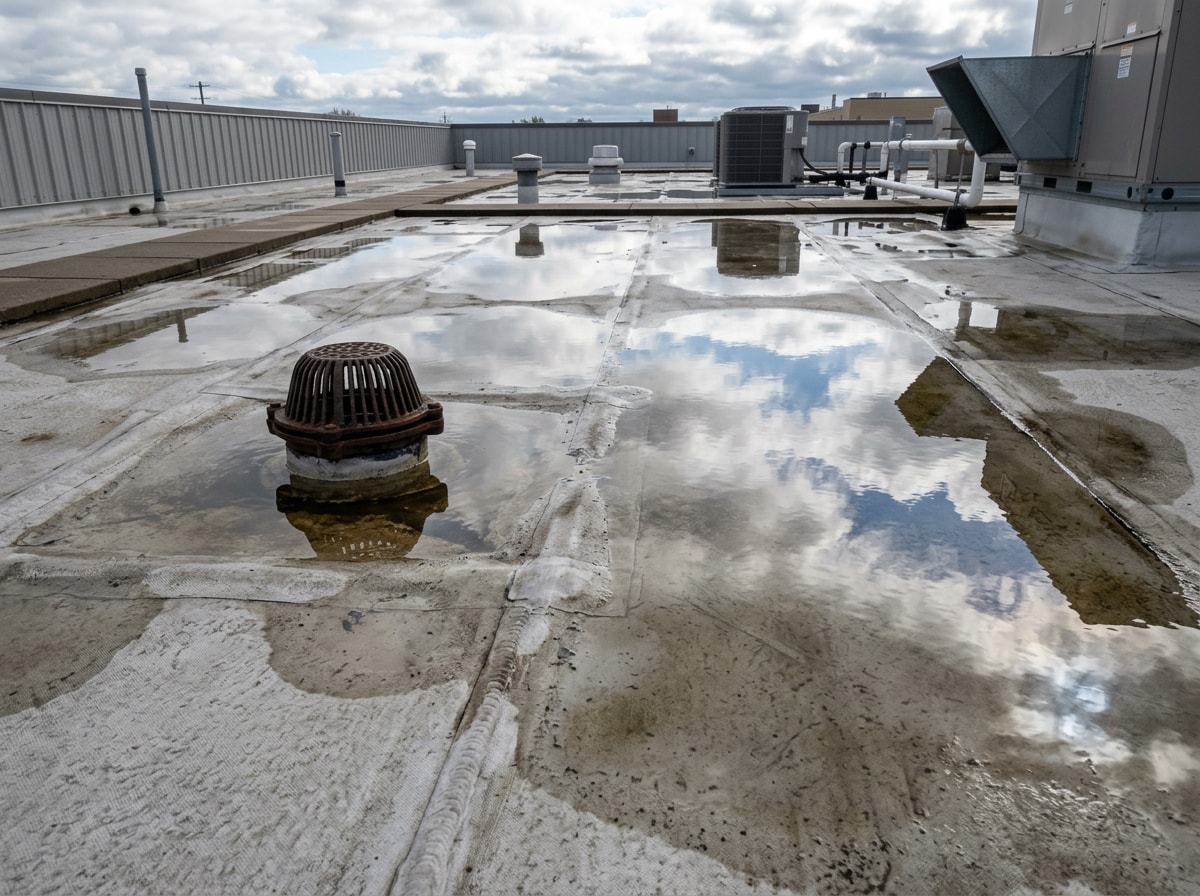
Most Scottsdale commercial buildings use flat or low-slope roofs, which only work if drainage is designed and maintained correctly. When scuppers, drains, or slope are even slightly off, water collects after monsoon storms and sits for days under the desert sun.
Standing water adds weight, stresses the membrane, and accelerates leaks at weak points. Flat roof drainage should be checked before monsoon season, not after the first storm exposes a problem. A roof inspection before June catches most of these issues while they're still cheap to fix.
Open Seams & Failed Welds
Seam failure usually traces back to poor welding during installation, seasonal expansion and contraction, UV weakening, general aging, or deferred maintenance. Once a seam opens, water can travel for yards underneath the membrane before it ever shows up as a ceiling stain, making the original leak point far harder to pinpoint than the visible damage suggests.
When Should You Call a Commercial Roofer?
A few warning signs mean it's time to stop waiting:
- Water stains on ceiling tiles or interior walls
- Blisters, cracks, or bubbling anywhere on the membrane
- Pooling or standing water that lingers more than 48 hours after a monsoon
- Rising utility bills with no other explanation
- Visible daylight through roof decking
- A sudden musty smell indoors
Catching these signs early almost always costs less than waiting for a full tear-off. If any of these sound familiar, start with roof repair rather than letting the damage spread.
What Services Do Commercial Roofers Offer?
A full-service commercial roofing contractor typically covers more than installation:
- Free inspections and estimates
- Emergency leak response
- Installation of TPO, SPF, modified bitumen, and metal systems
- Roof restoration and recoating to extend an aging roof's life
- Preventive maintenance contracts
- Storm damage restoration and insurance claim assistance after a monsoon event
- Drone inspections and moisture scans to find hidden problems
- City permitting and code compliance handling
Rooftop safety is part of that scope, too. Most Scottsdale commercial roofs are low-slope, and federal rules require each employee engaged in roofing activities on low-slope roofs, with unprotected sides and edges 6 feet or more above lower levels, to be protected from falling by guardrail systems, safety net systems, personal fall arrest systems, or a combination of warning line and guardrail systems . A contractor who can explain this without hesitation has actually worked on commercial roofs, not just residential ones.
How Much Does Commercial Roof Replacement Cost in Scottsdale, AZ in 2026?
Commercial roof replacement cost in Scottsdale typically runs $7 to $14 per square foot, though the exact number depends heavily on material, building size, and roof condition underneath. A 5,000-square-foot building generally falls between $35,000 and $70,000, while a 50,000-square-foot industrial facility can run $350,000 to $700,000.
| Material | Cost per sq ft | 5,000 sq ft building | 50,000 sq ft building |
|---|---|---|---|
| TPO | $6–$9 | $30,000–$45,000 | $300,000–$450,000 |
| PVC | $7–$11 | $35,000–$55,000 | $350,000–$550,000 |
| Modified Bitumen | $7–$10 | $35,000–$50,000 | $350,000–$500,000 |
| SPF | $5–$9 | $25,000–$45,000 | $250,000–$450,000 |
| Metal | $9–$14 | $45,000–$70,000 | $450,000–$700,000 |
TPO and other reflective membranes remain popular partly because of their cooling benefit. In air-conditioned residential buildings, the EPA found that solar reflectance from a cool roof can reduce peak cooling demand by 11 to 27 percent , and commercial buildings with similar exposure see comparable mechanical load relief. Treat the table above as 2026 planning estimates, not a quote — always confirm pricing with a written local bid before budgeting a project. Request a free commercial roofing estimate to get numbers specific to your building, or start with roof replacement if you already know your system has reached end of life.
Property owners comparing bids across the Valley often ask how pricing holds up outside Scottsdale too; our breakdown of free roofing estimates in Queen Creek covers that regional comparison in more detail.
Key Questions to Ask Before Hiring a Commercial Roofing Contractor
Before signing anything, vet the contractor the same way you'd vet any major commercial contractor:
- Do they hold proper Arizona commercial roofing licensing?
- Do they have direct experience with your building type and square footage?
- Can they provide proof of insurance and bonding?
- Which materials do they specialize in?
- What warranty or ongoing maintenance support comes with the job?
- How fast do they respond to emergencies?
Local experience matters more than it seems. A contractor working in our Scottsdale service area should already understand city permitting requirements, dust storm and drainage challenges, reflective roofing standards tied to energy codes, HOA or business park architectural rules, and HVAC/solar compatibility on the roof deck.
Before you sign a contract, verify the license yourself. Established in 1931, the Registrar of Contractors (AZ ROC) licenses and regulates over 45,000 residential and commercial contractors , and its free online contractor search tool lets you confirm status in minutes.
Why Trust This Guide
This guide was written and fact-checked by the commercial roofing team at AIM Services Roofing, which installs and repairs flat, low-slope, and metal systems for commercial and industrial properties across Scottsdale and the greater Phoenix metro. Our crews walk monsoon-damaged membranes every August, and the ponding and seam-failure patterns described above are what we document on site, not textbook generalizations. Have questions about your specific roof? Schedule a Free Inspection and we'll walk it with you.
FAQ
How Much Does Commercial Roof Replacement Cost in Scottsdale, AZ?
Commercial roof replacement in Scottsdale generally costs $7 to $14 per square foot, depending on material and building size. SPF and recoating options can come in lower than a full tear-off and replacement, making them worth asking about for roofs that aren't fully failed yet.
How Long Does a Commercial Roof Last in Scottsdale's Climate?
Lifespan varies by material: TPO and PVC typically last 15 to 25 years, modified bitumen 15 to 20 years, and metal roofing 40 to 50+ years. Scottsdale's intense heat and UV exposure tend to shorten these ranges compared to milder climates, so regular maintenance matters more here than in cooler regions.
How Often Should a Commercial Roof Be Inspected?
Most Scottsdale commercial roofs should be inspected at least twice a year, once before monsoon season and once after, plus an additional check following any major storm with high winds or hail. This cadence catches small issues like lifted flashing before they become full leaks.
What's the Best Roofing Material for a Commercial or Industrial Building in Scottsdale?
There's no single best material for every project. TPO and PVC lead for reflectivity and cost balance on most flat roofs, SPF works well for insulation and retrofits over existing roofing, and metal roofing offers the longest lifespan for warehouses and industrial buildings that can absorb the higher upfront cost.
Do I Need a Permit for Commercial Roof Replacement in Scottsdale?
Yes, in almost all cases. The City of Scottsdale requires a building permit for commercial roof replacement and most structural roof repairs. A licensed local contractor typically pulls this permit as part of the project, so confirm it's included in your written bid before work starts.
What's the Difference Between TPO and PVC Roofing?
Both are reflective single-ply membranes. PVC contains added chemical resistance that holds up better around grease, oils, and solvents, which is why it shows up more on industrial sites. TPO costs less and remains the more common choice for standard retail and office flat roofs.