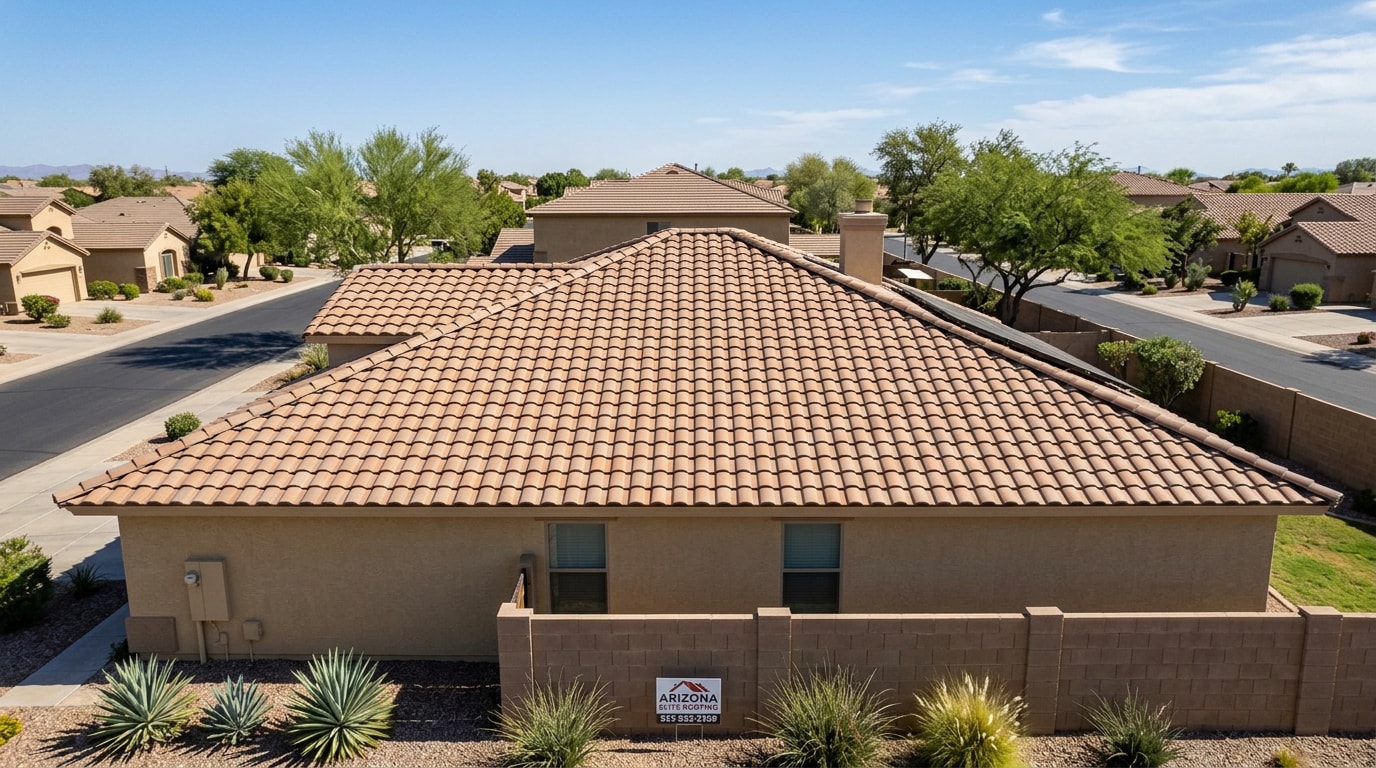
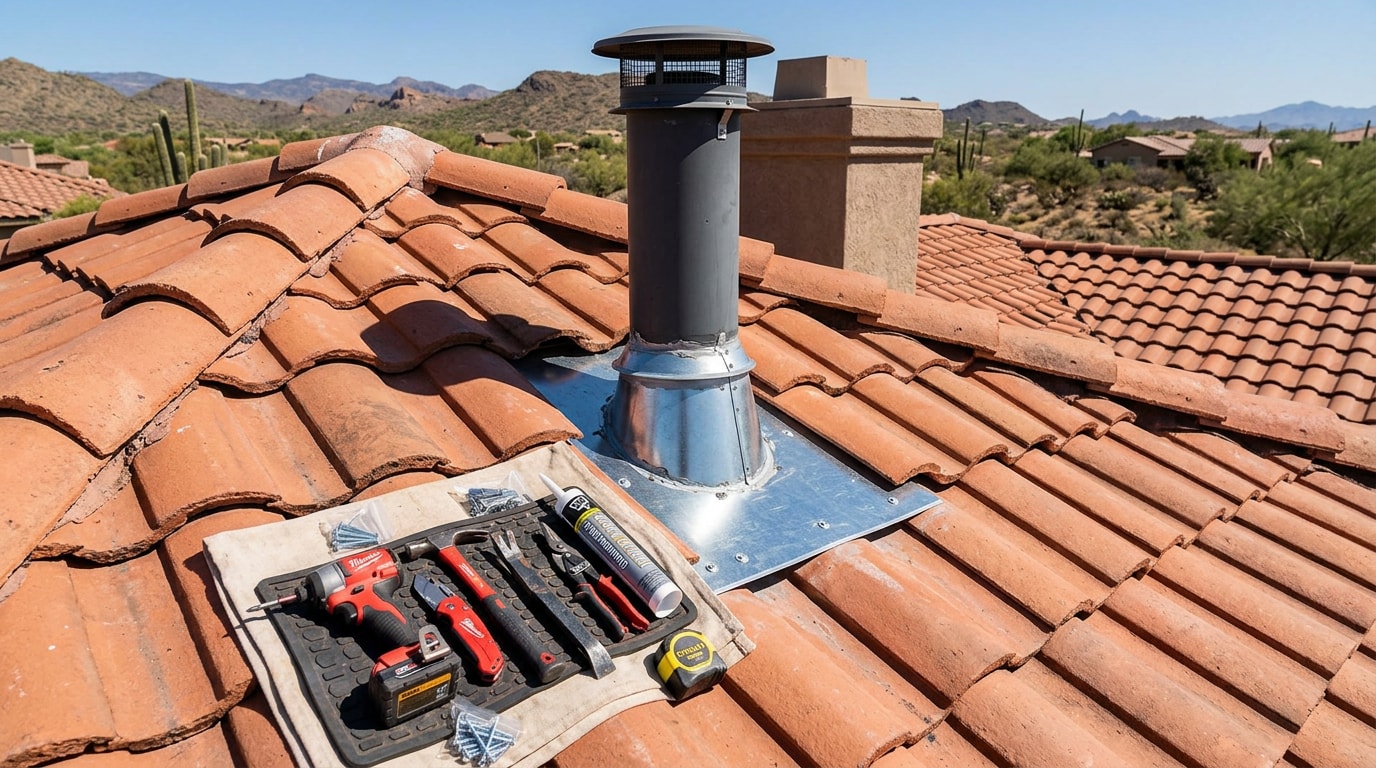
Roofing leak repair in Mesa, AZ starts with one question: where is the water actually coming from? A ceiling stain almost never sits directly above the hole that caused it, and guessing wrong means paying for the same repair twice. This guide walks through the real causes, how a proper diagnosis works, and what repairs cost in 2026, so you know what to expect before anyone climbs a ladder.
What Causes Roof Leaks in Mesa, AZ?
Most Mesa roof leaks trace back to a short list of repeat offenders:
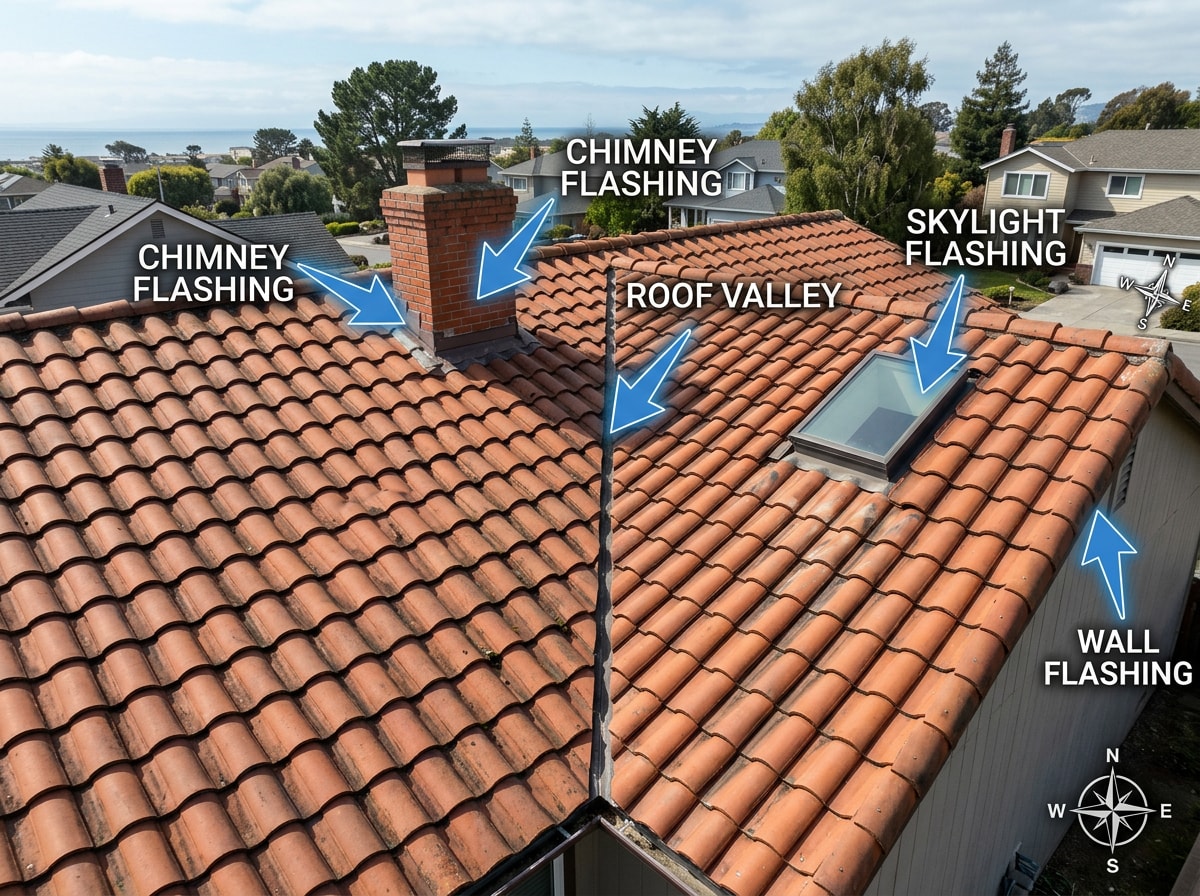
- Cracked or lifted flashing around chimneys, skylights, and wall-to-roof joints
- Dried-out caulking that has shrunk and separated from the surface it was sealing
- Failed pipe boots where plumbing vents pass through the roof deck
- Cracked or slipped tile that exposes the underlayment beneath it
- Clogged valleys packed with monsoon dust and debris that force water sideways instead of down
Mesa's climate makes every one of these worse. Intense UV exposure and daily heat cycling cause sealants and flashing materials to expand, contract, and fail years earlier than they would in a milder climate. Add a monsoon season that runs June 15 through September 30, according to the University of Arizona Cooperative Extension, and small gaps turn into fast entry points once wind-driven rain and dust arrive.
In the field, the "mystery leak" homeowners call about most often turns out to be a cracked pipe boot on a south-facing slope, not the spot where the ceiling stain actually shows up. Water follows rafters, decking, and insulation before it reveals itself somewhere else entirely, which is exactly why roof leak repair in Mesa almost always starts with tracing the path, not patching where the stain appears.
How Professionals Find a Roof Leak
Start inside the house at the spot where water is visibly coming through, then trace that path backward toward the source, checking chimneys, vents, plumbing stacks, and dormers along the way. The entry point is often several feet from where the water actually appears.
If you head into the attic to look yourself, move carefully:
- Step only on support beams, never on insulation or the back side of the ceiling
- Wear gloves and eye protection
- Use a flashlight and work in daylight hours when possible
- Stop and call a professional if the space is dark, hot, or hard to move through safely
A simple water-spray test, running a hose over a suspected section while someone watches from inside, can help narrow down a general area for a visible, accessible leak. It's a reasonable first step, but it only confirms a section, not the exact failure point.
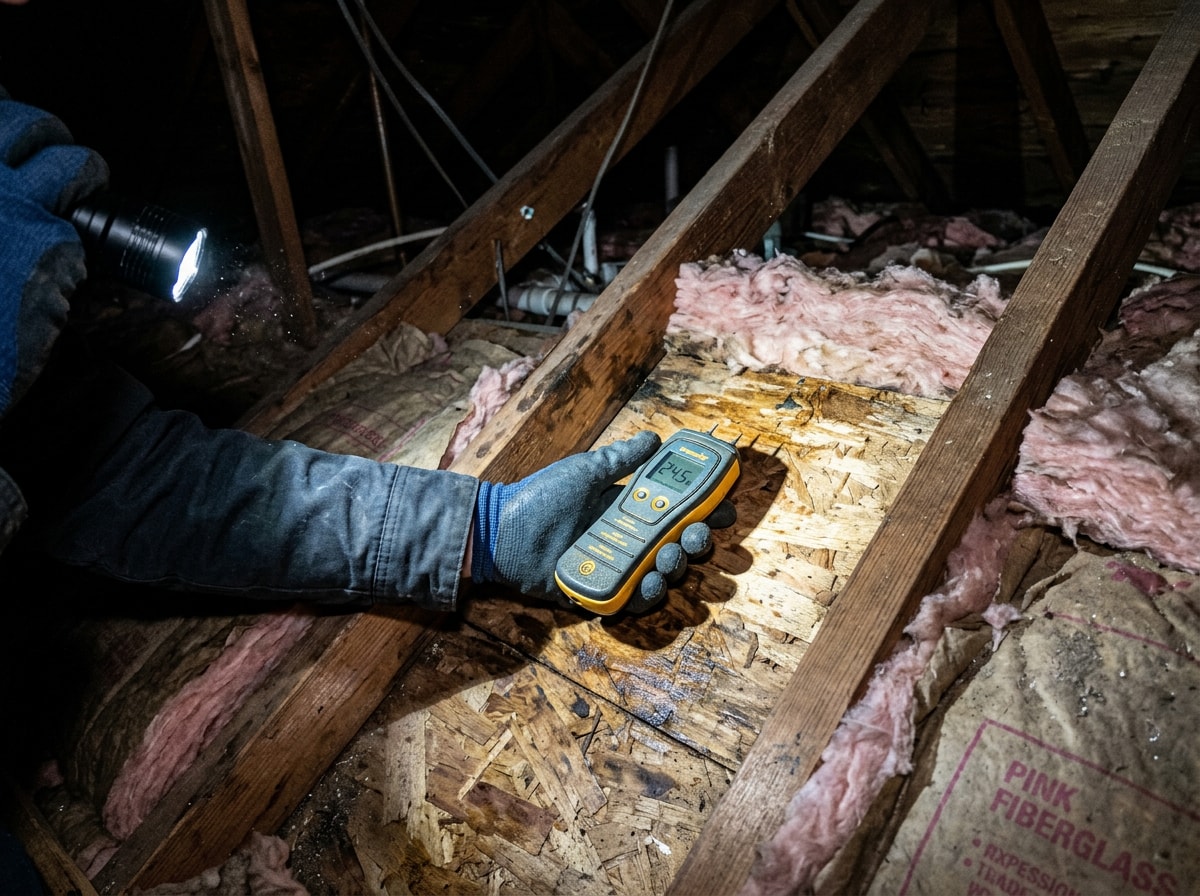
At AIM Services Roofing, trained inspectors go further, combining visual inspection, moisture-meter readings, and infrared scanning to trace a leak to its exact source, since leaks often travel far from where water shows up indoors. If your DIY test comes back inconclusive, the stain keeps spreading after a patch, or you can't safely access the suspected area, that's the point to stop testing and schedule a full roof inspection.
Our Roof Leak Repair Process
Once a leak source is confirmed, repair shifts from detection to correction, and how that correction is handled matters as much as finding the leak in the first place.
Root Cause Fix
A proper repair addresses the actual source of the leak permanently, not just the symptom. That distinction matters in Mesa, where repeated heat and monsoon cycles can reopen a surface-level patch within a single season.
Root cause repair means identifying exactly which flashing, seal, or underlayment section failed and rebuilding that connection correctly, not just covering the visible gap.
Interior Check
A complete repair doesn't stop at the roof surface. After exterior work is finished, the attic and ceiling should be checked for trapped moisture, mold growth, or insulation damage that may need separate attention.
This step matters because water can sit unseen for weeks before staining or odor appear. Catching attic moisture early helps with mold prevention and avoids a second repair bill down the line.
If the leak followed a storm, document the damage before repairs begin. Our storm damage restoration team can coordinate directly with your insurance claim so the paperwork and the repair move at the same pace.
Repair, Monitor, or Replace?
Not every leak calls for a full roof replacement, but figuring out which category yours falls into takes an honest look at three things:
- Whether the failure is isolated to one area or spread across the roof
- What condition the surrounding material is in
- Whether the repair itself (lifting tile, opening a membrane, accessing the deck) is likely to expose more damage that should be included in the scope
A single cracked flashing seal on an otherwise sound roof is usually a straightforward repair. A leak on a roof already near the end of its service life is a different conversation. The National Roofing Contractors Association notes that most new roofs are designed to provide useful service for about 20 years, and actual lifespan depends on local climate, material quality, installation quality, and maintenance history. A 15-year-old Mesa tile roof with a failed valley is worth repairing. A 22-year-old roof with that same failure, plus granule loss or multiple past patches, is worth a second opinion before spending more money on it.
Our roof repair and roof replacement teams give that opinion as part of every inspection, not as an upsell after the fact.
Repairs by Roof System
A clean field of tile or shingle can hide a working problem underneath it. Repair planning has to define exactly how much material needs to come up and how the water-control layer reconnects to sound surrounding roof.
Tile Roofs
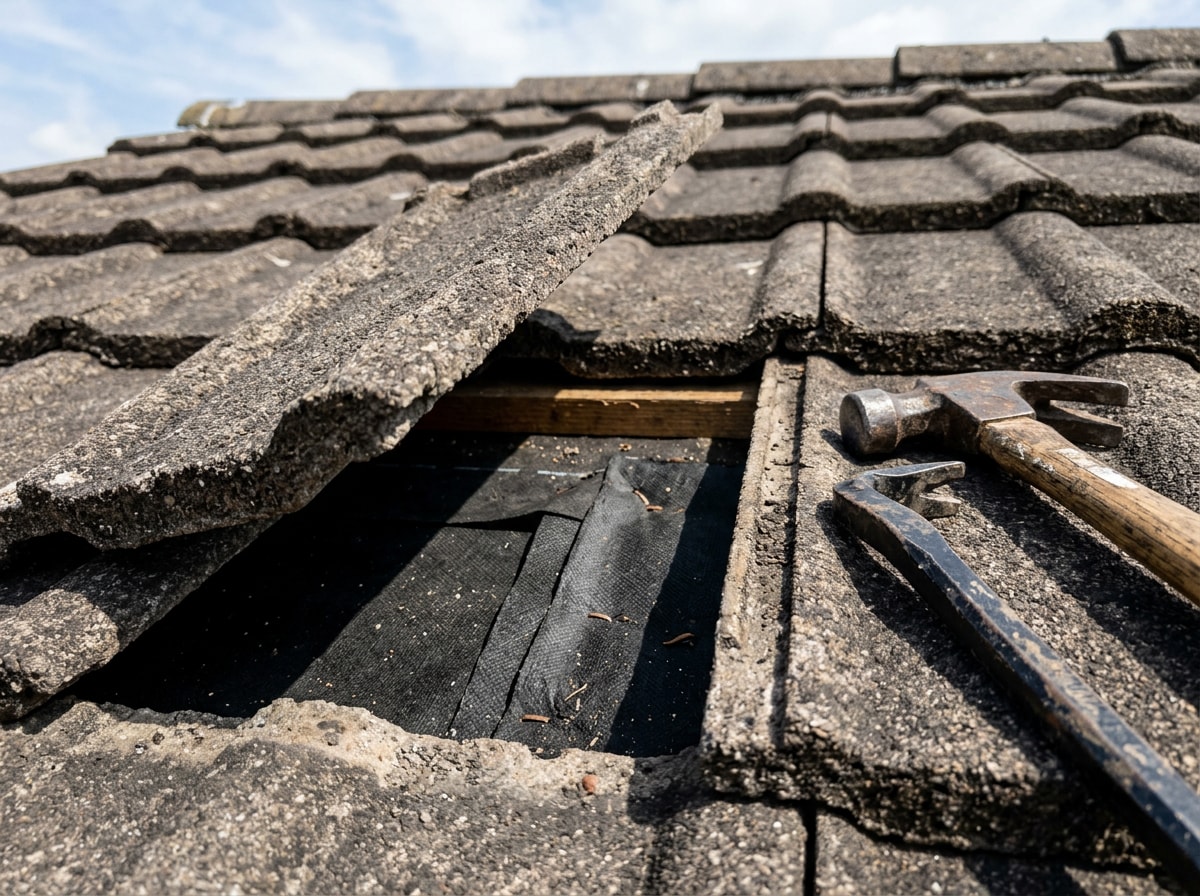
The tile itself is usually not the failure point; the underlayment beneath it is. A roof valley leak, in particular, almost always points to underlayment failure rather than cracked tile, which changes both the repair method and the cost. See our tile roofing services for how we approach tile-specific repairs.
Shingle Roofs
Shingle systems fail differently than tile. Wind lift, cracked or missing shingles, and worn pipe boots are the usual culprits. Matching the existing shingle profile and exposure matters for both the seal and the look of the repair; browse our shingle roofing options for reference.
Flat, Foam, and Metal Systems
Low-slope and metal roofs require different diagnostic and repair techniques entirely, from seam reseals on membrane roofs to recoating on foam systems. An accurate diagnosis of the roof type always comes before any flashing repair or patch work begins. If you're also comparing materials before a repair becomes a replacement, our Cheapest Roofing Material in Mesa, AZ (2026 Price Guide) breaks down the options side by side.
Roof Leak Repair Cost in Mesa, AZ (2026)
Roof leak repair costs in Mesa vary widely because the range of possible failures is wide. A simple flashing reseal caught early looks nothing like a leak that sat undetected for months and reached the decking.
| Repair Type | Typical Cost Range |
|---|---|
| Minor flashing or pipe boot reseal | $250 – $600 |
| Tile reset with underlayment patch | $400 – $1,200 |
| Shingle section replacement | $300 – $800 |
| Flat or foam membrane patch | $500 – $1,500 |
| Emergency / after-hours response | $600 – $2,500+ |
| Storm damage repair | $700 – $3,000+ |
These figures are typical ranges for the Mesa market and will move based on leak location, water damage severity, roof material, roof pitch and accessibility, and whether same-day emergency service is needed. An inspection-based quote is the only way to get a number specific to your roof.
Does Homeowners Insurance Cover It?
Coverage usually comes down to cause. The Insurance Information Institute notes that insurers will generally pay for water damage from rain entering through a hole in the roof as long as that hole was caused by a covered event, like a storm. Gradual wear and tear, aging materials, and deferred maintenance typically are not covered, regardless of how the water got in. If your leak followed a storm, our insurance claim assistance team can help document the cause before you file.
Emergency Roof Repair Costs
When a leak can't wait, pricing shifts. After-hours and rapid-response calls cost more because crews are stabilizing the roof first, tarping, sealing, or boarding to stop active water intrusion, before a full diagnosis and permanent repair can even begin.
Ready for an exact number? Schedule a free inspection and get a quote based on what's actually happening on your roof, not a phone estimate.
FAQ
Why does my roof leak only sometimes?
Intermittent leaks are usually caused by wind-driven rain entering from a specific direction, or by condensation building up in the attic during temperature swings. These are harder to pinpoint with a simple visual check, but moisture-meter and infrared detection can identify them reliably.
Can you fix a roof leak from inside the attic?
A temporary measure can sometimes slow a leak from inside, but a permanent fix almost always requires work on the exterior roof surface. Technicians trace the leak path from the attic to locate the entry point, then repair it from outside.
How do I know whether my Mesa roof can be repaired?
Repair is usually the right call when the failure is isolated, the surrounding material still has useful life left, and the repair can be integrated without creating new damage elsewhere on the roof. An aging roof with multiple past repairs is worth a replacement conversation instead.
Can you repair tile and shingle roofs in Mesa?
Yes. Both systems are commonly repaired, but each requires matched materials and techniques, as outlined in the roof system section above. Our Mesa, AZ service area page has more on what we cover locally.
Is a leaking roof always an emergency?
Not always, but treat it like one until a professional says otherwise. A small, steady drip during dry weather can usually wait a day or two for a scheduled inspection. Active leaking during a storm, water near electrical fixtures, or a sagging ceiling needs same-day attention.
How long does a roof leak repair take in Mesa?
Most isolated repairs, like a flashing reseal or a pipe boot replacement, are completed in a single visit. Repairs that involve lifting tile, replacing underlayment, or addressing interior drywall and mold take longer and are usually scoped during the inspection.
Does homeowners insurance cover roof leak repair?
Generally, storm or sudden-event damage is covered, while gradual wear and tear typically isn't. Coverage details vary by policy, so confirm specifics with your carrier before assuming either way. Learn more about our full range of services on our homepage.
About the Author
This guide was prepared by the team at AIM Services Roofing, a roofing contractor serving Mesa and the East Valley with roof inspections, repairs, replacements, and storm damage restoration. For a diagnosis on your specific roof, contact our team to schedule a free inspection.