Roofing membrane in Casa Grande, AZ has to survive triple-digit heat for months at a stretch, then take a direct hit from monsoon downpours a few weeks later. Pick the wrong system and you're patching seams by year eight. Pick the right one and a flat commercial roof can run 20 to 30 years with minimal drama.
This guide breaks down TPO, EPDM, PVC, and modified bitumen side by side, with real cost and lifespan ranges, so you can choose with confidence instead of guessing.
What Is a Roofing Membrane?
A roofing membrane is a single sheet of waterproof material rolled out and sealed across a low-slope or flat commercial roof to block water, UV rays, and weather damage. The main types are TPO, PVC, EPDM, and modified bitumen, and they differ in cost, durability, seam strength, and how much heat they reflect.
Most commercial buildings in Casa Grande use a single-ply system (TPO, PVC, or EPDM), while modified bitumen stays popular on older roofs and buildings that take a lot of rooftop foot traffic. The right call depends on your roof's size, slope, equipment load, and budget, which is exactly what we walk through below.
Why Casa Grande's Climate Demands the Right Membrane
Picking a membrane here isn't the same decision as picking one in Seattle or Chicago. Casa Grande sits in the Sonoran Desert, and the roof deck takes a beating from two directions: relentless summer heat, then sudden monsoon storms.
The hot season in Casa Grande runs from late May to mid-September, with daily highs averaging above 97°F, and July is the hottest month with an average high of 104°F. That kind of sustained heat softens asphalt-based materials, accelerates UV breakdown, and makes membrane reflectivity a real factor in your cooling bill, not just a marketing claim.
Then comes monsoon season. Arizona's monsoon season runs from June 15 through September 30 and is associated with thunderstorms that produce lightning, strong winds, and heavy rains. A flat roof with poor drainage can hold standing water after one of these storms for days, which is exactly when ponding-related leaks show up on membrane seams and around rooftop penetrations.
In short: reflectivity keeps cooling costs down for nine months of the year, and seam integrity plus drainage keeps water out during the other three. A membrane system has to handle both.
Comparing Roofing Membrane Types for Casa Grande, AZ
Here's how the four most common commercial membrane options stack up.
| Membrane | Typical Lifespan | Relative Installed Cost | Reflectivity | Seam Type |
|---|---|---|---|---|
| TPO | 20–30 years | Moderate | High (white/light gray) | Heat-welded |
| PVC | 20–30 years | Moderate–High | High (white/tan/gray) | Heat-welded |
| EPDM | 20–25 years (longer with thicker gauge) | Low–Moderate | Low (black) / Moderate (white) | Adhesive or tape |
| Modified Bitumen | 15–20 years | Moderate | Low | Torch-down or self-adhered |
These are general industry ranges, not quotes. Actual cost and lifespan depend on membrane thickness, insulation, installer quality, and how well the roof is maintained afterward.
TPO Membrane
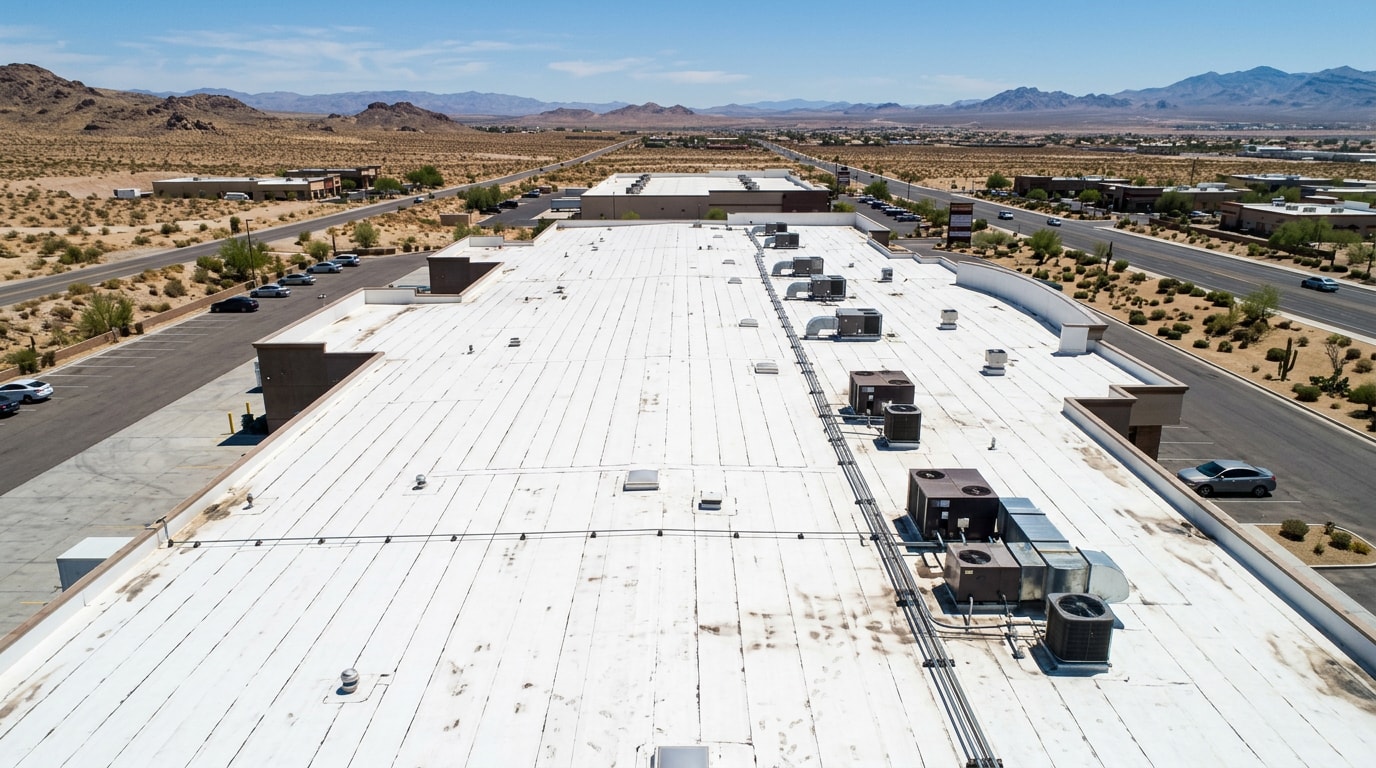
TPO (thermoplastic polyolefin) is the most widely specified flat roofing membrane for Arizona commercial properties, thanks to its reflective, heat-resistant surface. It's a strong fit for warehouses, retail centers, and large flat-roof buildings where heat gain drives up cooling costs.
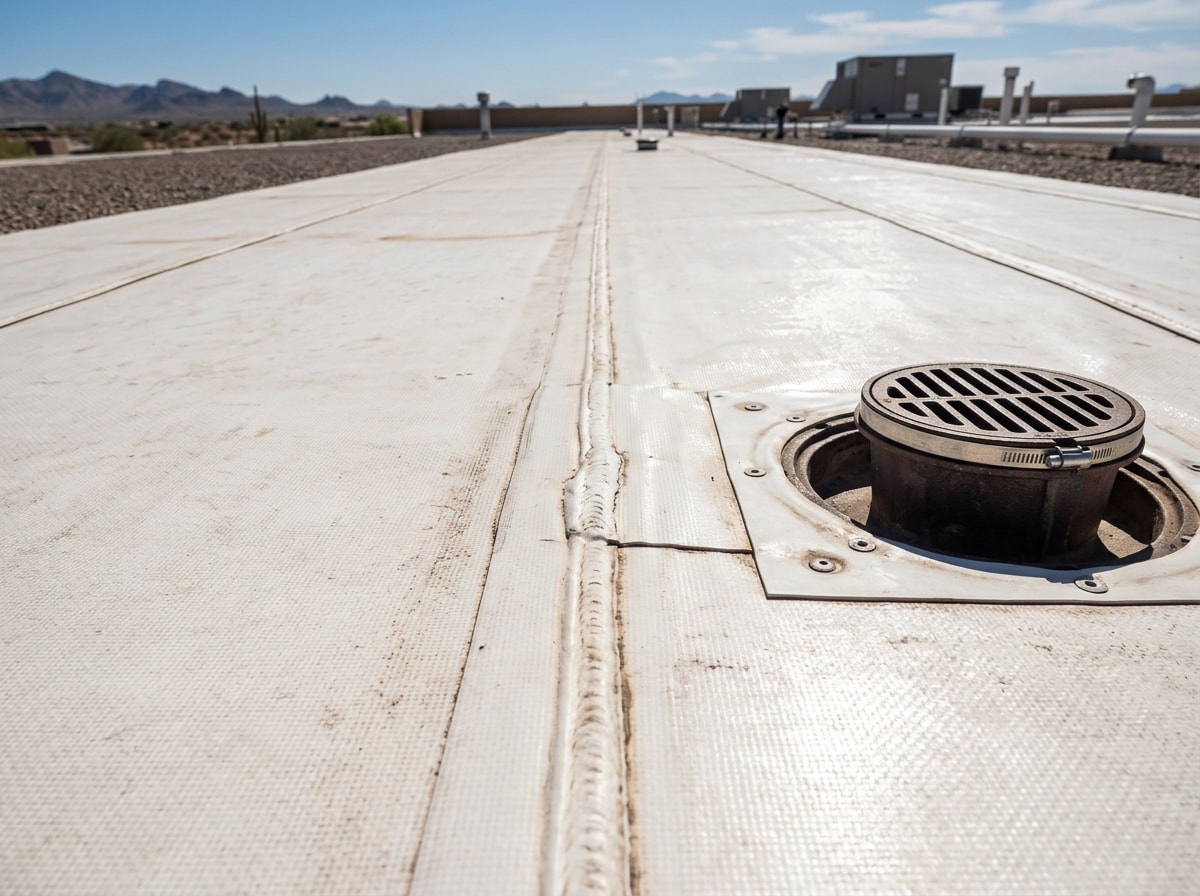
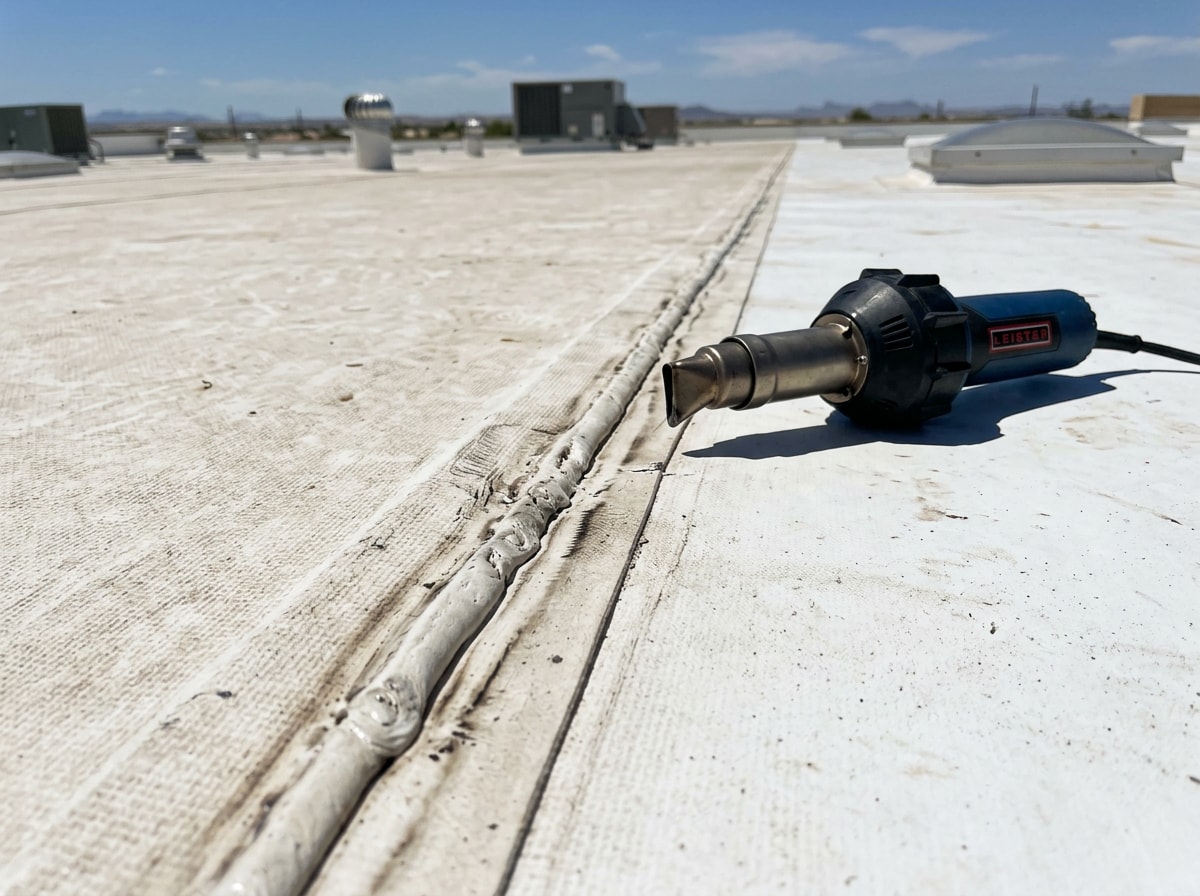
Seams are heat-welded for a watertight bond, and most TPO membranes come in white or light gray finishes built to meet cool-roof reflectivity standards. A cool roof reflects sunlight and stays cooler than a traditional roof that absorbs it, which is the basic mechanism behind TPO's energy savings.
EPDM Membrane
EPDM is a durable rubber membrane that resists UV degradation and handles the wide swing between scorching afternoons and cooler desert nights. It's common on established commercial buildings and tends to be the most budget-friendly single-ply option when extreme reflectivity isn't the priority, such as smaller outbuildings or roofs with heavy shading from adjacent structures.
The tradeoff: EPDM seams are bonded with adhesive or tape rather than heat-welded, so seam quality depends heavily on installer skill. Black EPDM also runs hotter than TPO or PVC in direct sun, which matters on a building where cooling costs are a bigger concern than upfront price.
PVC Membrane
PVC gets left out of a lot of local membrane guides, which is a gap worth closing. It shares TPO's heat-welded seam strength and reflective white finish, but adds something TPO doesn't: strong resistance to grease, chemicals, and oils. That makes PVC the go-to choice for restaurants, food processing facilities, and any building with rooftop kitchen exhaust or chemical venting, situations that are common enough in Casa Grande's growing industrial and food-service sector to call out separately.
The downside is cost. PVC typically runs higher per square foot than TPO or EPDM, and older PVC formulations could lose flexibility over time as plasticizers migrated out of the sheet. Modern PVC has improved on that front, but it's still worth asking your installer about the specific product's plasticizer retention if you expect a 25-plus year service life.
Modified Bitumen
Modified bitumen is a layered, asphalt-based membrane valued for strong puncture and impact resistance. It holds up well on roofs with heavier foot traffic or rooftop equipment, though it typically isn't as reflective as TPO or PVC and tends to have a shorter realistic service life than single-ply options.
Membrane Thickness: Why Mil Rating Matters
One thing most local membrane guides skip entirely: thickness. Single-ply membranes are sold in different mil (thousandths of an inch) thicknesses, and the number you choose affects both durability and price.
- 45-mil: The thinnest common option. Lower cost, but more vulnerable to punctures from foot traffic, hail, or dropped tools during HVAC service.
- 60-mil: The standard choice for most commercial roofs. Balances cost against puncture resistance.
- 80-mil: Heavier gauge for roofs with frequent foot traffic, rooftop solar arrays, or exposed mechanical equipment.
If your building has a lot of rooftop units, solar panels, or service traffic, paying for the heavier gauge up front is usually cheaper than patching punctures every few years.
Advantages and Disadvantages of Single-Ply Roofing Membranes
Every membrane system involves tradeoffs. Here's the honest breakdown.
Advantages
- Affordable relative to other commercial systems. Single-ply membranes generally cost less than built-up roofing or heavy-gauge metal systems.
- Flexible under thermal stress. The membrane adapts to building shifts, wind uplift, and the expansion/contraction cycle that comes with Casa Grande's 40-plus-degree daily temperature swings.
- UV resistant. These materials are engineered to withstand sustained desert sun without cracking prematurely.
- Fast installation. Heat-welded seams go down quickly compared to multi-layer systems, which means less time with an open roof deck.
Disadvantages
- Ponding water risk. Flat roofs lack the slope to shed water quickly, and standing water accelerates wear if drainage isn't addressed.
- Puncture vulnerability. Foot traffic, debris, and poorly managed rooftop equipment can tear a thin membrane.
- Code-driven drainage requirements.
Building codes require secondary (emergency overflow) drains or scuppers sized to prevent ponding water from exceeding the depth the roof was designed for. That's not optional paperwork. It's the difference between a roof that sheds a monsoon storm and one that collects it.
- Shorter lifespan than some alternatives. Single-ply membranes typically last 20 to 30 years with regular upkeep, which is shorter than tile or standing-seam metal, though routine inspections meaningfully extend service life.
Roofing Membrane Installation & Repair Services in Casa Grande, AZ
Once you've settled on a membrane type, finding a crew that installs and maintains it correctly matters just as much as the material choice. Our team installs and services membrane roofs across Casa Grande and the surrounding Pinal County area, and the patterns we see on inspections are consistent: most failures trace back to installation shortcuts or deferred maintenance, not the membrane itself.
New Roof Installation
A proper membrane roof installation accounts for insulation, vapor barriers, flashing, and drainage, not just the surface sheet. Whether it's TPO, EPDM, PVC, or modified bitumen, the system should be matched to the building's structure, usage, and rooftop equipment load. Our roofing contractor services page covers what to expect from a full install, and our roof replacement page breaks down the process when an old system is past saving.
Roof Repair & Restoration
Common repair needs include fixing flashing, patching membrane punctures, resolving seam separations, and addressing ponding areas before they cause interior leaks. For roofs nearing the end of their service life, restoration options like recoating or overlay can delay a full replacement for several more years. Browse our roof repair services page for restoration timelines and costs, or start with a roof inspection if you're not sure which category your roof falls into.
If a recent storm caused the damage you're dealing with, our storm damage restoration and insurance claim assistance services can help you navigate that process too. For a closer look at how commercial systems get specified locally, our Commercial Roofing Systems in Casa Grande, AZ buyer's guide goes deeper into system selection for larger properties.
Not sure which membrane fits your building? Schedule a free inspection and we'll walk the roof with you before recommending anything.
FAQ
What is the difference between TPO and EPDM roofing membranes?
TPO is typically white and highly reflective, which makes it better at reducing heat gain on sun-exposed roofs. EPDM is a darker rubber membrane valued more for UV resistance and its ability to handle wide temperature swings than for reflectivity, and its seams are adhesive-bonded rather than heat-welded.
How long does a roofing membrane last in Casa Grande, AZ?
Single-ply membranes typically last 20 to 30 years with proper maintenance, though installation quality, membrane thickness, and upkeep all play a role. Most new roofs are designed to provide useful service for about 20 years, with actual lifespan determined by local climate, design, material quality, application, and maintenance.
Is single-ply roofing membrane energy efficient in Arizona's heat?
Yes, if it's a reflective type. White TPO and PVC membranes are particularly effective at reducing heat absorption, which can meaningfully lower cooling costs for buildings across Casa Grande. Black EPDM doesn't offer the same reflectivity benefit unless it's a white-surfaced EPDM product.
How much does a roofing membrane cost per square foot?
Costs vary by membrane type, thickness, and roof complexity, but single-ply systems generally fall in a moderate range compared to other commercial roofing options, with EPDM usually the least expensive and PVC the most expensive of the three single-ply types. Get a site-specific quote since insulation needs and existing deck condition change the number significantly.
What thickness membrane is best for Arizona roofs?
60-mil is the standard choice for most commercial buildings and balances cost against durability. Roofs with heavy foot traffic, rooftop solar, or frequent HVAC service should consider 80-mil for better puncture resistance.
How often should a membrane roof be inspected?
Twice a year at minimum, ideally before and after monsoon season, plus after any major storm. Catching a small seam separation or puncture early is far cheaper than repairing the interior water damage that follows a missed one.
What roofing systems work best for commercial buildings in Casa Grande, AZ?
TPO, EPDM, PVC, metal, built-up roofing, and modified bitumen are all commonly recommended, depending on the building's size, slope, and usage. A roof with rooftop kitchen exhaust leans toward PVC; a large flat warehouse roof usually leans toward TPO. Check our Casa Grande service area page for system recommendations specific to your property type, or visit our homepage to see our full range of roofing services.