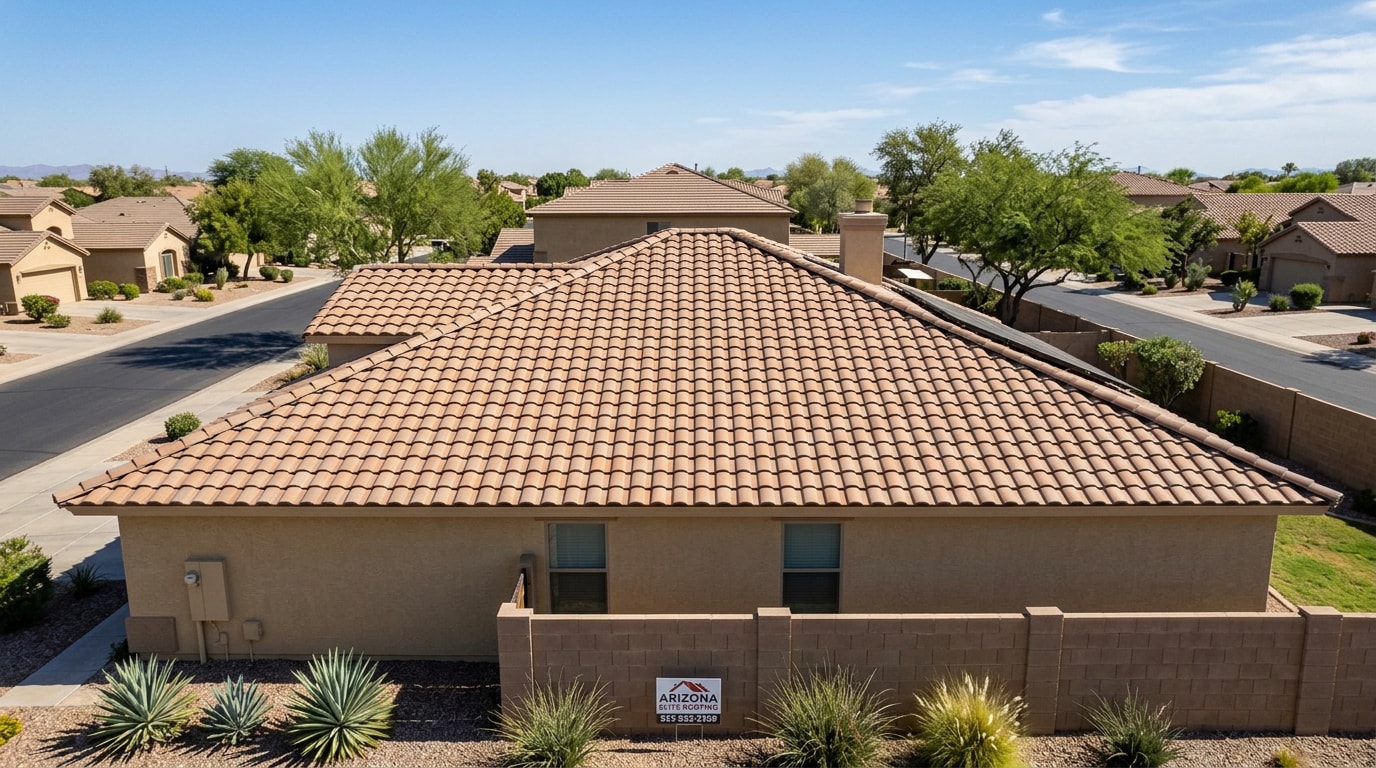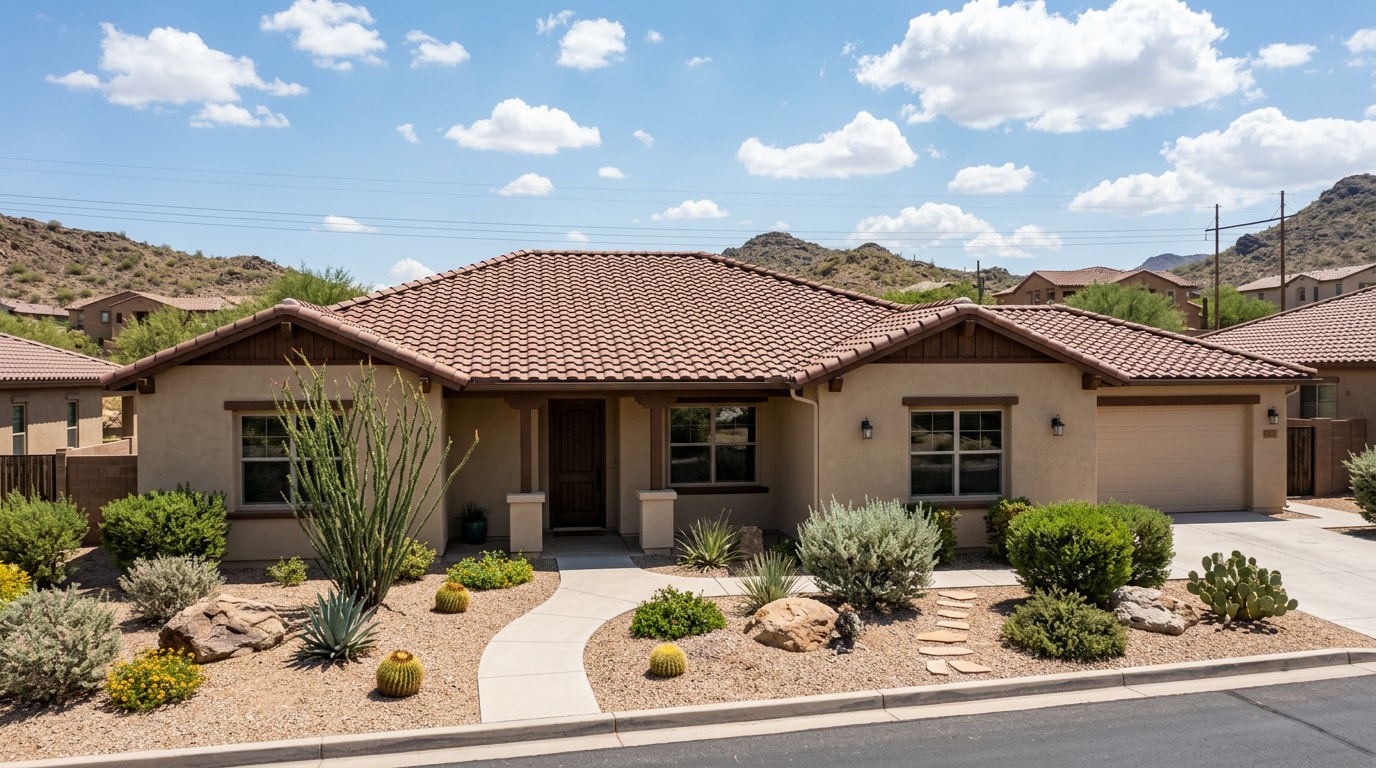
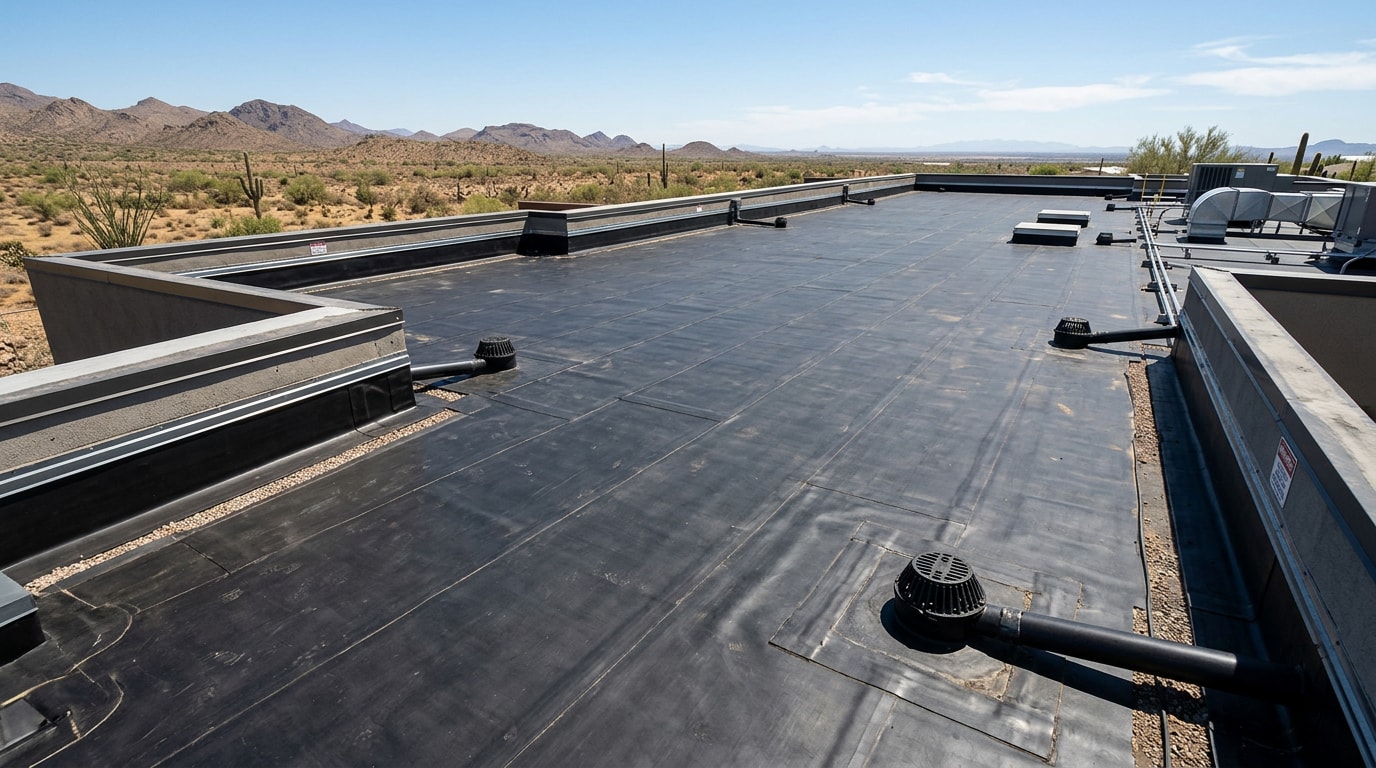
An EPDM roofing system is one of the most budget-friendly ways to protect a flat or low-slope roof through Florence, AZ's triple-digit summers. Pinal County's heat load is brutal on membranes, and not every single-ply option ages the same way under it. This guide breaks down real lifespan data, cost drivers, and how EPDM actually compares to TPO before you commit to either one.
What Is an EPDM Roofing System?
EPDM stands for Ethylene Propylene Diene Monomer, a synthetic rubber single-ply membrane used on low-slope and flat roofs. It flexes with temperature swings and conforms to irregular roof shapes without cracking, which is part of why it has remained a staple commercial roofing material for decades.
The membrane isn't defined by marketing copy. It covers flexible sheet made from ethylene-propylene-diene terpolymer intended for use in single-ply roofing membranes exposed to the weather. That sheet can come in a few different configurations depending on the project. The sheet may be non-reinforced, fabric- or scrim-reinforced, or fabric-backed vulcanized rubber sheet. For the full technical breakdown, see the ASTM D4637 standard for EPDM roofing membranes.
If you're weighing EPDM against other low-slope membrane options in the Valley, our Rubber Roofing Material in Phoenix, AZ guide covers the broader category in more depth.
EPDM vs. TPO: Which Single-Ply System Fits Florence, AZ?
Most flat-roof projects in Pinal County come down to two choices: TPO and EPDM. Both are common, but they age differently once the sun does its work.
TPO (Thermoplastic Olefin)
TPO roofing is a widely used, energy-efficient membrane known for resisting UV rays and chemical exposure. Its heat-welded seams create strong, water-tight joints, and its reflective white surface bounces sunlight away from the building, which helps lower cooling costs on flat or low-slope roofs.
EPDM (Ethylene Propylene Diene Monomer)
EPDM roofing is a synthetic rubber membrane valued for flexibility and resilience. In Florence's triple-digit summers and wide seasonal temperature swings, it resists UV and ozone damage well. It's also generally easier and more affordable to install and repair than reflective alternatives, which keeps it popular with budget-conscious owners.
Why Florence's Desert Climate Changes the EPDM Equation
Florence sits in the same heat zone as the Phoenix metro, and the numbers back that up. Phoenix's July 2026 climate summary shows just how far above average the heat is running. The 2026 average high temperature reached 108.3°F against a 1991–2020 normal of 106.5°F. That kind of sustained, above-normal heat accelerates expansion, contraction, and membrane aging on every flat roof in the region, EPDM included.
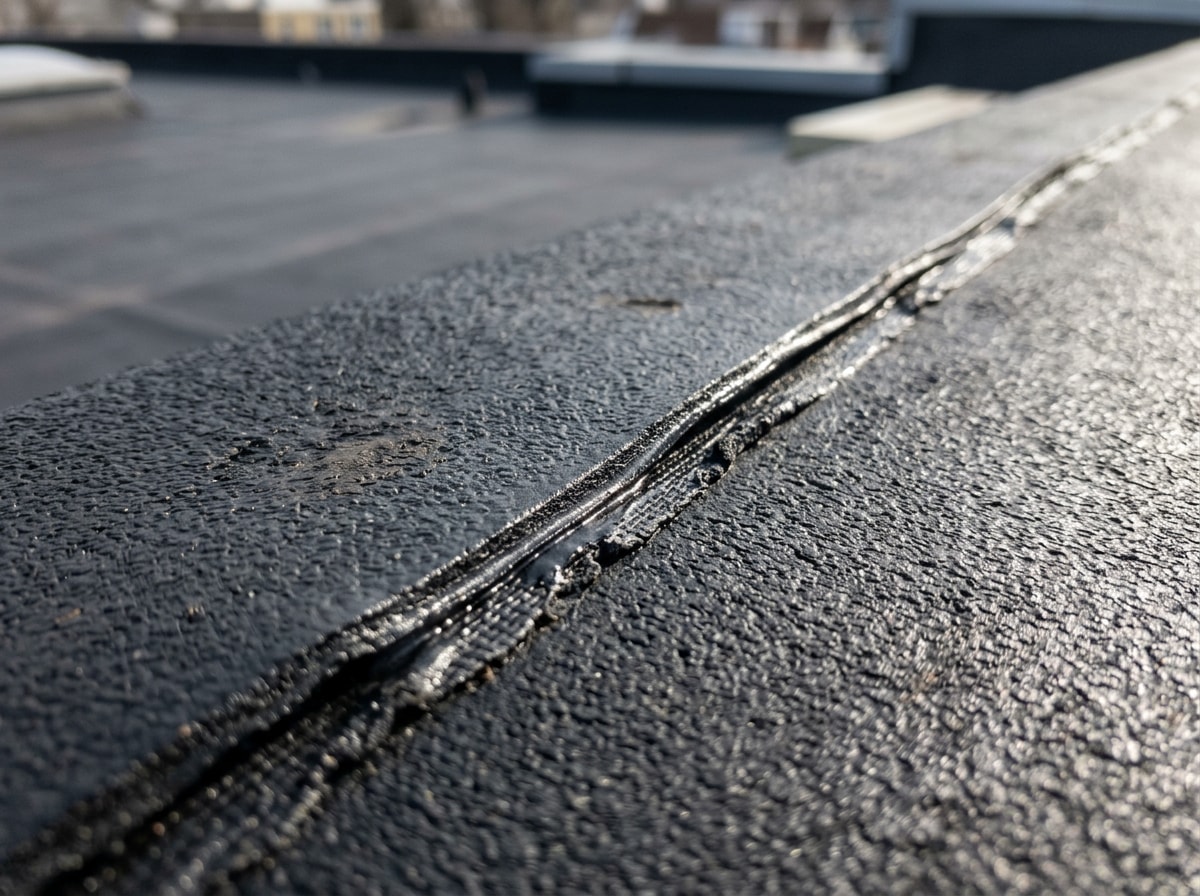
Our crews see this firsthand on Florence re-roof calls. The pattern is consistent on mechanically fastened EPDM systems installed without a cover board: seam stress and early ponding issues tend to show up well before the membrane's rated lifespan, usually a decade or more ahead of schedule. A cover board and correct attachment method matter more in Pinal County than they do in milder climates.
EPDM's dark membrane absorbs more solar heat than a reflective surface, but it's manufactured with UV stabilizers to handle sustained exposure. The three properties that matter most for cutting cooling load are high solar reflectance, endurance of that reflectance over time, and high thermal emittance. See the U.S. Department of Energy's cool roof guidance for the technical thresholds behind that trade-off.
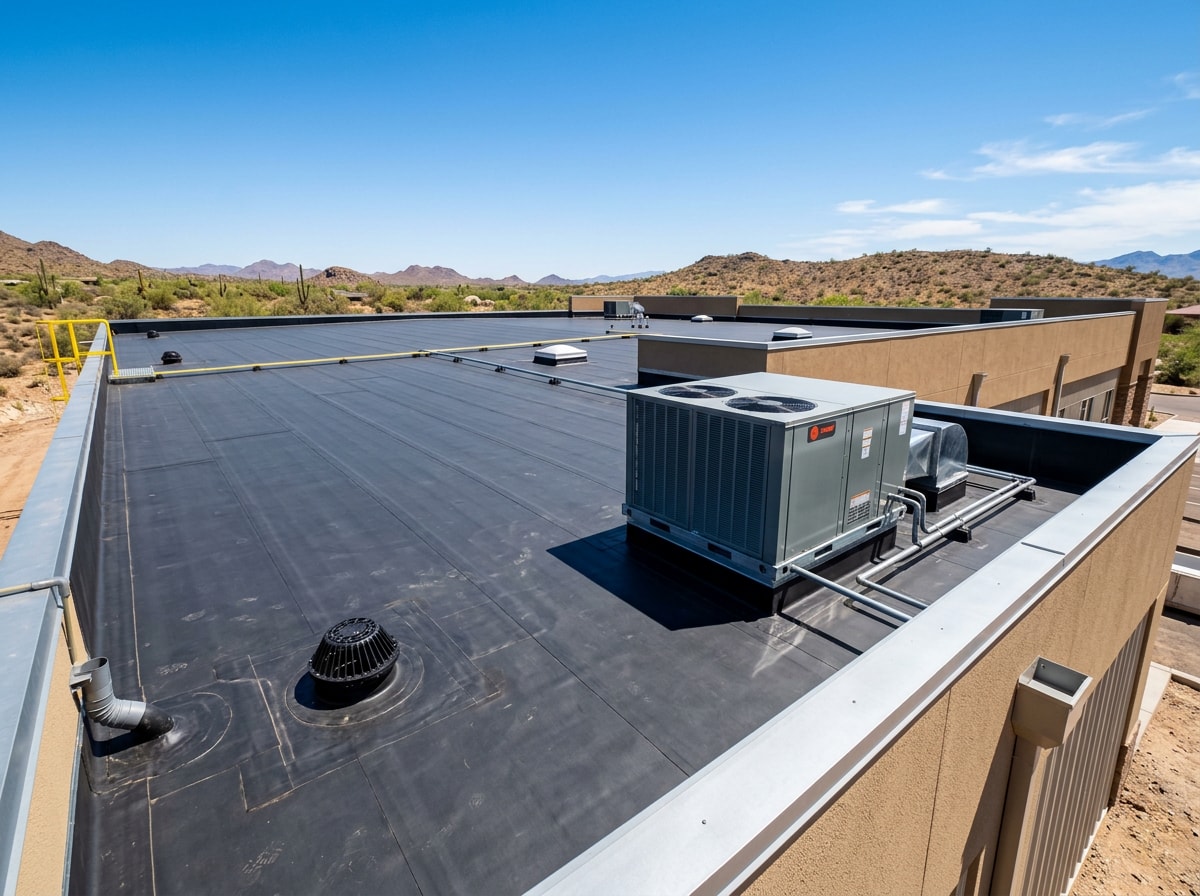
Benefits of an EPDM Roofing System
EPDM's reputation for longevity isn't just a sales line anymore. New industry research has pushed the numbers higher than most contractors used to quote.
- Long service life.
Properly designed, installed, and maintained EPDM roof membranes have an expected service life of 38 years.
- Thickness and attachment matter.
Mechanically fastened 60-mil EPDM membranes typically land in the 25–29 year range, while adhered 90-mil membranes push toward 40-plus years of service.
- Affordability. EPDM is generally the lowest-cost single-ply membrane per square foot installed.
- Low maintenance. Fewer seams and simple field repairs keep upkeep costs down over the membrane's life.
- Flexibility. The membrane handles thermal movement without cracking, a real asset given Florence's daily temperature swings.
Before you lean on a 38-year figure for your own roof, get it confirmed on-site. A roof inspection tells you what thickness and attachment method is actually on your building, which drives where in that range your roof will fall.
Reflective or Retentive (EPDM vs. TPO Color and Energy Efficiency)
TPO membranes are generally white and highly reflective, while EPDM has a dark, heat-retentive surface. That means EPDM naturally absorbs more heat, a real factor in Florence's cooling-cost math, though a white elastomeric coating can offset some of that gap if energy efficiency is the priority over upfront cost.
EPDM vs. TPO: Single-Ply Roofing Systems Comparison
| Factor | EPDM | TPO |
|---|---|---|
| Typical service life | 25–40+ years (thickness/attachment dependent) | 15–25 years |
| Cost per sq. ft. (installed) | Lower | Mid-range |
| Reflectivity / energy efficiency | Lower (dark membrane) | Higher (reflective) |
| Puncture resistance | Moderate | Higher |
| Best use case | Budget-driven, stable-load roofs | Cooling-cost-sensitive buildings |
Pricing varies by membrane thickness, attachment method (ballasted, mechanically fastened, or fully adhered), and current material costs. Browse our roofing material options or request a free estimate to compare EPDM against TPO for your specific building.
How to Choose the Right Roofing System in Arizona
Budget and energy goals usually drive the decision more than anything else.
- Low budget → EPDM is typically the most affordable single-ply option.
- Mid-range budget, cooling costs matter → TPO's reflectivity usually wins out.
- Premium budget, long-term energy performance → PVC or a metal system often pencils out better over 20+ years.
If cutting cooling costs is the top priority, TPO or a reflective coating over EPDM will outperform a standard dark membrane. If upfront cost and proven durability matter more, EPDM remains a solid, defensible choice for Florence properties. Either way, talk through your goals with a licensed local crew and schedule a free inspection before signing anything.
When to Replace Your EPDM Roofing System
Most single-ply systems, EPDM included, perform well for decades with proper upkeep, but no membrane lasts forever. Watch for these warning signs:
- Seam separation or lifting at the edges
- Ponding water that doesn't drain within 48 hours
- Brittle, cracked, or shrinking membrane sections
- Visible flashing failure around parapets or penetrations
- A roof that's past its manufacturer warranty period
Once a roof shows two or more of these signs, repair stops making financial sense and replacement becomes the smarter move. A roof replacement evaluation can tell you definitively which direction to go. If a recent storm is behind the damage, our storm damage restoration and insurance claim assistance teams can help you navigate that process too.
AIM Services Roofing has handled EPDM installs, repairs, and re-covers across Florence and the broader Florence, AZ service area for years. If you're not sure where your roof stands, schedule a free inspection and we'll give you a straight answer, not just a sales pitch. You can see examples of our completed work on the projects page, and get the full picture of what we do at our homepage.
FAQ
What Is EPDM Roofing Made Of?
EPDM roofing is made of a synthetic rubber compound derived from ethylene and propylene, combined with a diene monomer. This composition gives the membrane its stretch, flexibility, and resistance to weather over time.
How Long Does an EPDM Roof Last in Arizona Heat?
Properly installed EPDM can reach 25 to 40-plus years depending on membrane thickness and attachment method, though Arizona's sustained heat makes installation quality and cover board use more important than in milder climates. Thinner, mechanically fastened membranes without a cover board tend to show wear sooner in triple-digit summers.
How Much Does EPDM Roofing Cost?
EPDM roofing cost generally runs lower than TPO or PVC on a cost-per-square-foot basis, though exact pricing depends on membrane thickness, attachment method, and current material markets. Getting a local quote is the only way to pin down firm numbers for your building.
Is EPDM Roofing Good for Residential Roofs?
Residential EPDM roofing works well on flat roof homes and low-slope additions, like porches or garages, rather than traditional pitched roofs. Suitability depends more on roof shape than whether the building is residential or commercial.
Can EPDM Be Installed Over an Existing Roof?
In some cases, EPDM can go over an existing roof as a re-cover installation if the current surface is dry and structurally sound. A full tear-off is usually recommended when there's existing water damage. A roof inspection can confirm which approach fits your roof.
Is EPDM Roofing Waterproof?
Yes. EPDM is a fully adhered or mechanically sealed membrane that provides a continuous waterproof barrier when installed correctly. Most failures trace back to seam work or flashing details, not the membrane material itself.