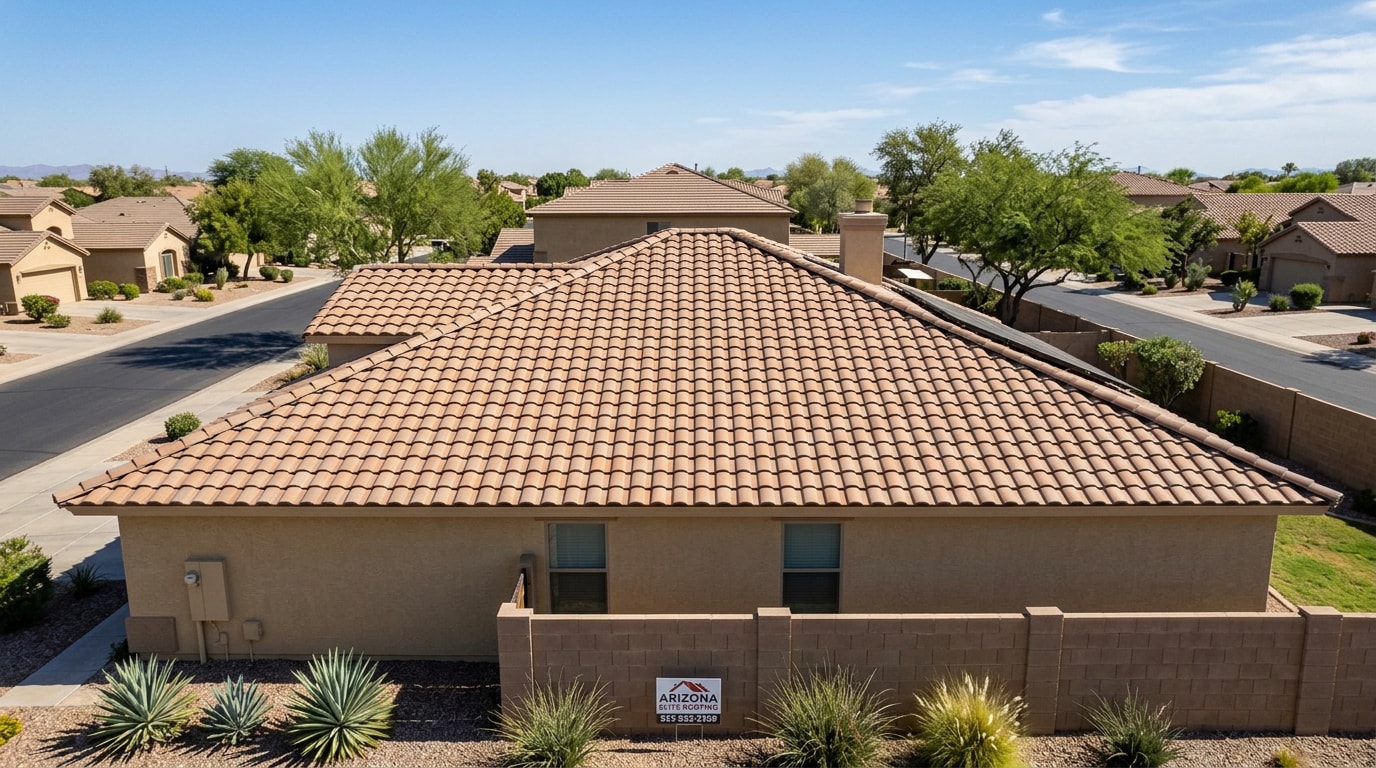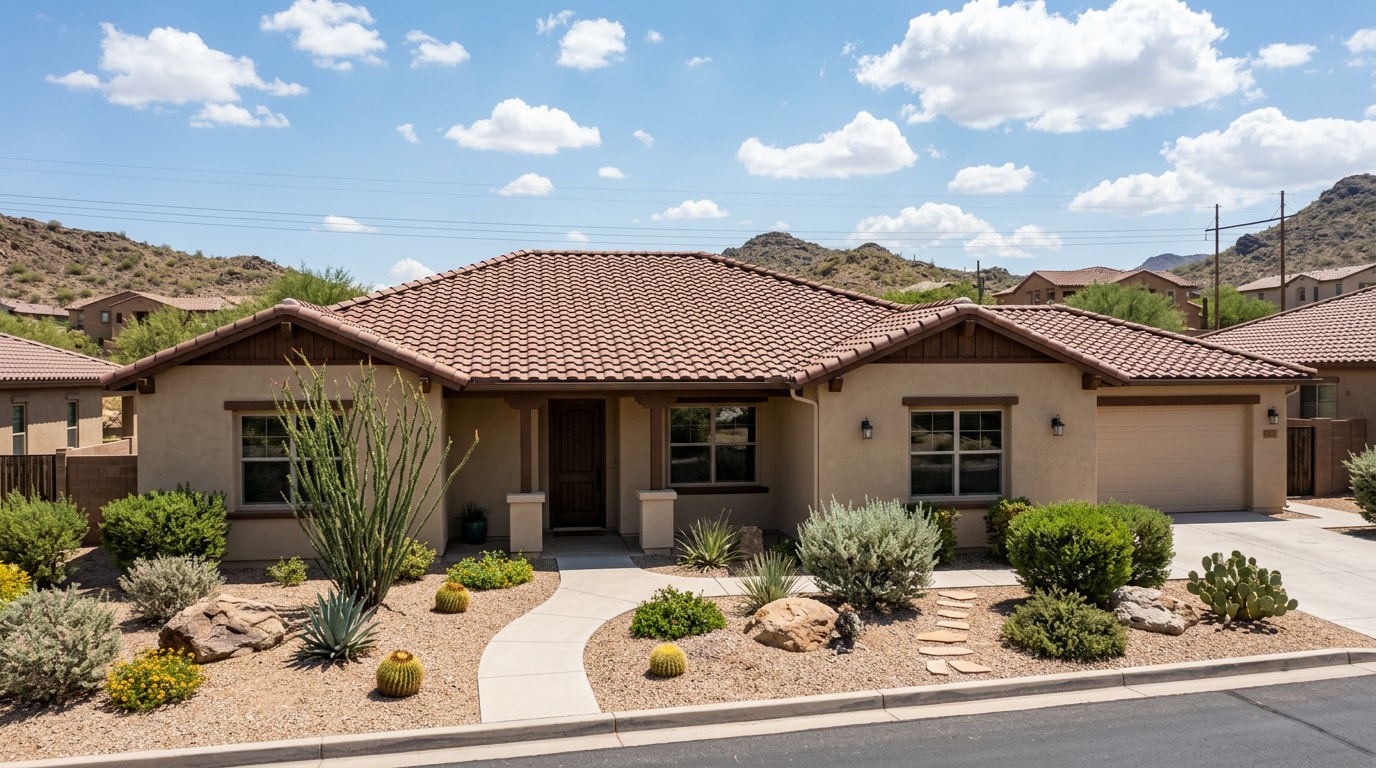
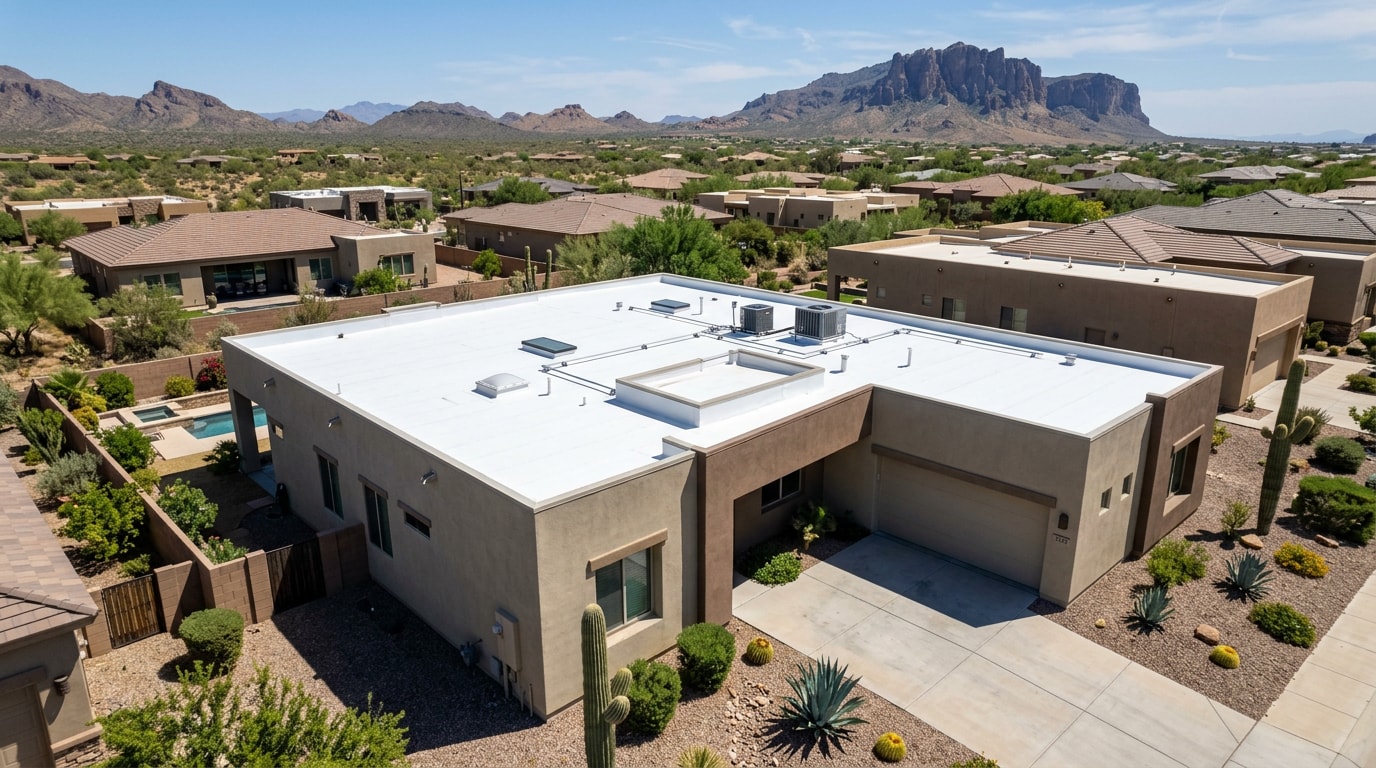
Flat roof waterproofing in San Tan Valley, AZ is what stands between a roof that lasts 20 years and one that fails after a single bad monsoon. Triple-digit heat bakes membranes all summer, then storms dump an inch of rain in under an hour and find every crack the sun created. Get the system and the maintenance schedule right, and the roof becomes a non-issue for a decade or more.
Why Flat Roof Waterproofing Matters Here
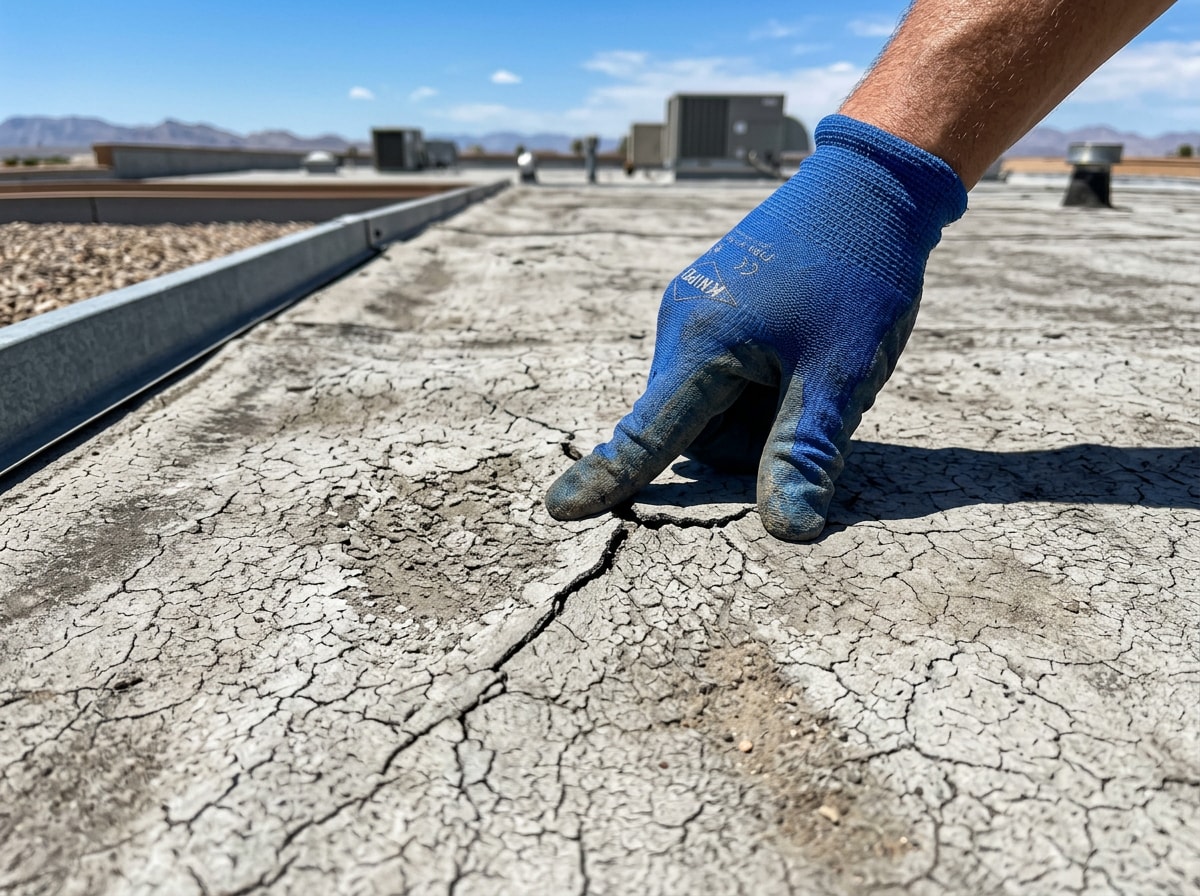
A flat roof has almost no slope to shed water fast, so any gap in the waterproof layer gives moisture time to work inward. Sun-baked membranes crack first. Monsoon rain finds the crack next. In our inspections across San Tan Valley's 85140 and 85143 ZIP codes, that pattern shows up on roofs as young as eight years old when the original coating was never recoated on schedule.
The Hidden Dangers of a Compromised Membrane
A failed membrane lets water reach the wood deck, insulation, and interior finishes. The damage compounds fast: rotted framing, stained drywall, ruined flooring, and conditions right for mold.
The EPA's guide on mold and moisture provides information and guidance for homeowners and renters on how to clean up residential mold problems and how to prevent mold growth , and its central message is that moisture control is key to controlling mold, with advice on drying wet areas within 24-48 hours . That short window is why a slow leak deserves a same-week response, not a "watch it" approach.
What's Actually Attacking Your Roof
Several mechanical stresses drive the damage above:
- Thermal cycling. Surface temperatures swing from over 150°F at midday to much cooler overnight, flexing seams and coatings until they fatigue.
- UV breakdown. Constant sun exposure breaks down the oils and plasticizers in membranes, making them brittle.
- Ponding water. Storm runoff that can't drain accelerates membrane wear at the exact spots already under stress.
- Debris buildup. Dust storms and desert landscaping clog drains and trap moisture against the surface.
None of this is unique to any one property. It's simply what owning a flat roof in this region means.
Flat Roof Waterproofing Options for San Tan Valley Homes
Not every roof needs the same fix. The right system depends on budget, how long you're staying in the home, and whether you're renewing an aging roof or starting fresh.
Single-Ply Membranes: TPO and PVC
TPO and PVC are single-ply membranes installed in large sheets with heat-welded seams, creating a continuous barrier against water intrusion. TPO's white, reflective surface qualifies as a cool-roof option, which helps cut attic temperatures during summer. PVC costs more but resists chemicals and grease better, which is why it shows up on restaurants and commercial kitchens with rooftop exhaust systems.
Modified Bitumen
Modified bitumen uses layered base sheets and a torch-down cap sheet, fused together for a thick, multi-ply assembly. The layered build adds redundancy. If one layer gets nicked, the layers beneath still hold.
Elastomeric Roof Coatings
An elastomeric coating is applied as a liquid over an existing roof, curing into a flexible, rubber-like waterproof layer. For roofs that are structurally sound but showing surface wear or chalking, this is usually the most cost-effective option on the table.
Spray Polyurethane Foam (SPF)
SPF is sprayed on as a liquid foam that expands and hardens into a seamless, insulating surface, then gets topped with a protective coating. With no seams to fail, it's become a popular choice across the East Valley for its mix of insulation value and leak resistance, especially on older roofs with irregular drainage. See our foam roofing page for how we spec and apply SPF systems locally.
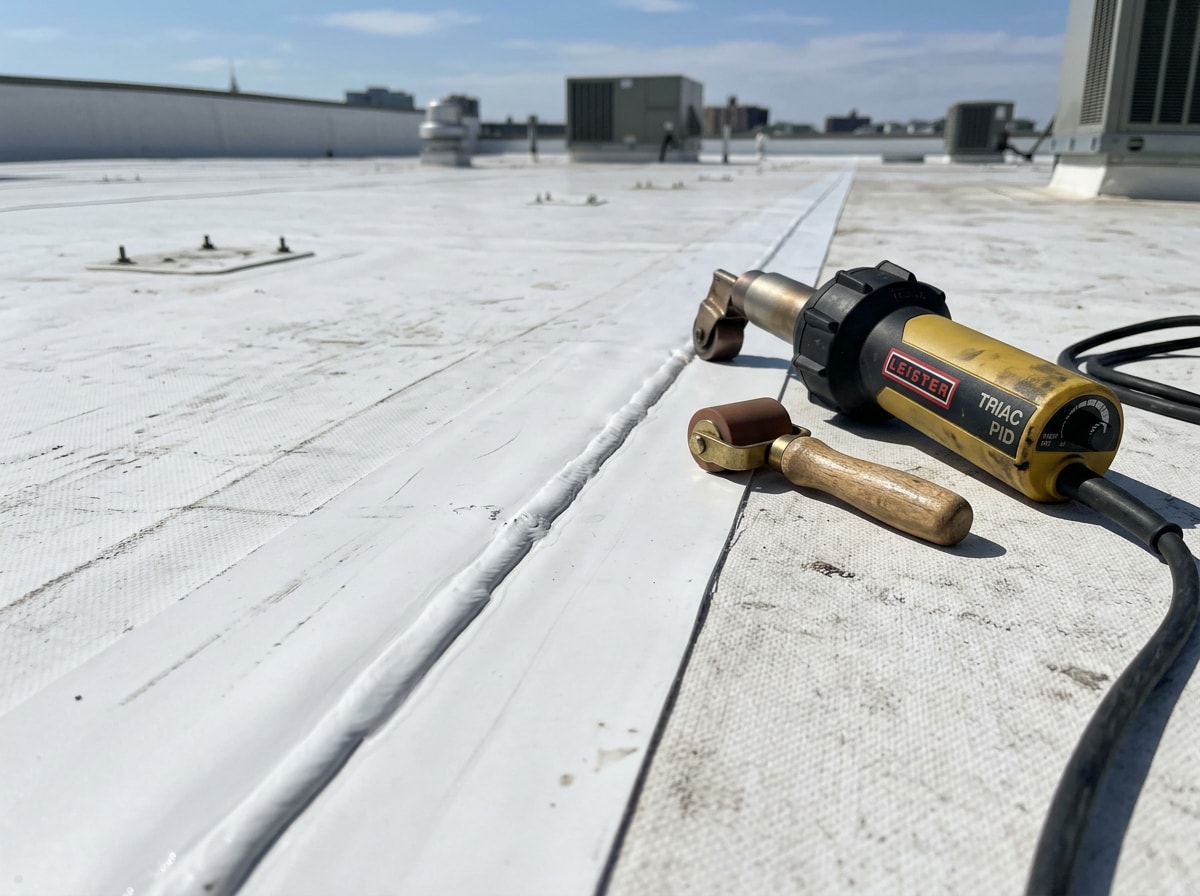
Which System Fits Your Roof?
| System | Typical Lifespan | Reflectivity | Est. Cost per Sq Ft (2026) | Best For |
|---|---|---|---|---|
| Elastomeric Coating | 5–10 years | High | $1.50–$3.50 | Renewing a sound existing roof |
| TPO Membrane | 20–25 years | Very high | $6–$9 | New installs, cool-roof priority |
| PVC Membrane | 20–30 years | High | $7–$10 | Restaurants, chemical exposure |
| Modified Bitumen | 15–20 years | Moderate | $5–$8 | Budget-conscious redundancy |
| SPF Roofing | 20–30+ years (with recoats) | High | $5–$7 | Insulation plus waterproofing |
Not sure which row fits your roof? Schedule a Free Inspection and we'll walk the roof with you before recommending anything.
What Flat Roof Waterproofing Costs in San Tan Valley (2026)
For a 1,500-square-foot flat roof, that table translates roughly to $5,250 for an elastomeric recoat, $9,000 for SPF, or $11,250 for a new TPO install, before accounting for existing damage. These figures are directional. Actual bids vary by roofer, roof access, and current material pricing.
Whether you're paying for a simple renewal coating or a full tear-off and install changes the math dramatically. It's worth getting quotes for both, since a roof close to end-of-life may need the full install regardless of upfront cost difference.
What drives the price:
- Roof size. Contractors generally price per square foot, so this is the biggest single factor.
- System type. An elastomeric recoat runs a fraction of a new TPO or PVC install.
- Existing damage. Rotted decking, saturated insulation, or failed flashing all need repair before waterproofing can begin. A roof inspection up front catches this before it becomes a change order mid-project.
- Access and labor. Steep ladder runs and rooftop equipment that crews have to work around add time.
Get two or three written estimates that itemize these factors separately. It makes comparing bids apples-to-apples much easier. If a roofer's quote reveals rot or structural damage, our roof repair team can usually fold that work into the same visit rather than sending you to a second contractor.
Keeping Your Waterproof Seal Intact
Installing the system is half the job. Keeping it performing for its full rated lifespan takes a handful of habits that take less time than most homeowners expect.
Know Your System's Maintenance Rhythm
Maintenance needs differ by material:
- SPF needs its topcoat monitored for wear.
- Elastomeric coatings need recoating on a fixed schedule.
- Modified bitumen needs its seams and flashing checked for separation.
Inspect Before and After Monsoon Season
Officially, monsoon season in Arizona runs from June 15th to September 30th , per the National Weather Service. A pre-season inspection catches cracks and loose flashing while they're cheap to fix. A post-season check confirms the roof actually held up. We build both visits into our roof inspection scheduling for clients across the San Tan Valley area.
Clean Debris and Check Drains
A simple monthly sweep keeps drains clear and prevents organic buildup that traps moisture against the membrane. After any major storm, a quick walk-through to check for blockages is worth the ten minutes it takes.
Watch for Ponding Water
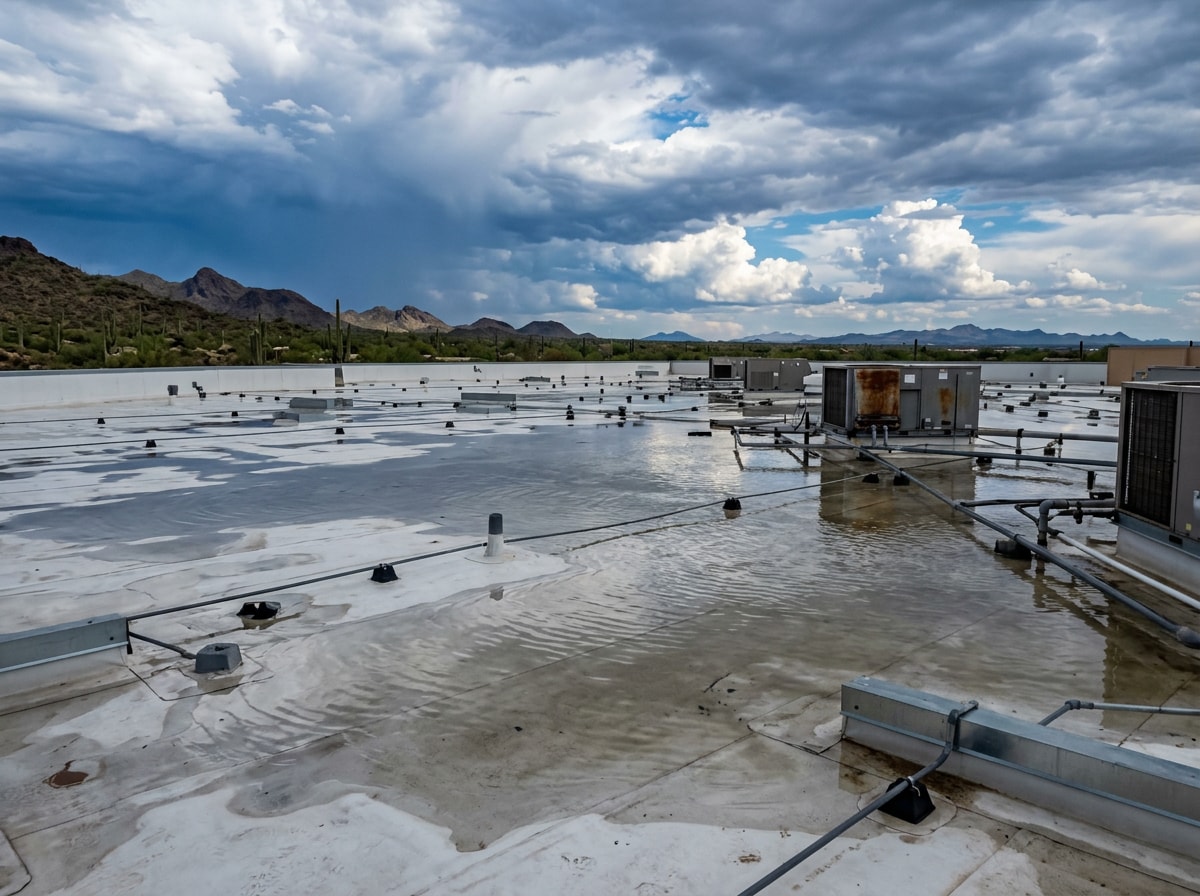
Standing water that remains on a flat roof for more than 48 hours after a storm signals a drainage or slope problem. Prolonged ponding accelerates membrane breakdown and adds significant structural weight. If ponding keeps recurring in the same spot, that's usually a low spot or clogged drain, not something a patch will fix. A roofer can evaluate whether tapered insulation or additional drains are needed.
Manage Thermal Expansion and UV Wear
Arizona's wide temperature swings cause roofing materials to expand and contract daily, and that movement fatigues seams and coatings over time. Reflective coatings help offset this. Studies on cool roofs show that in warm or hot climates, substituting a cool roof for a conventional roof can reduce the annual air conditioning energy use of a single-story building , which is part of why ENERGY STAR tracks reflective roof products as a distinct category worth specifying in hot climates. A fresh UV-reflective coating should generally go back on every five to ten years, depending on the product and sun exposure. Check annually for chalking (a powdery surface residue) and hairline cracks.
Recoat on Schedule
Sticking to the manufacturer's recoat window is what actually preserves the seal long-term. Skipping it lets small cracks turn into leaks. If you're also dealing with shingle sections on the same property, our guide to roof sealant for shingles in San Tan Valley covers the maintenance side for those surfaces.
Ready to get ahead of monsoon season? Schedule a Free Inspection with our team, or browse recent projects to see how we've handled flat roofs like yours. You can also reach us through our homepage for general questions about scheduling.
FAQ
How Often Should a Flat Roof Be Waterproofed?
It depends on the system. Elastomeric coatings typically need recoating every 5 to 10 years, while single-ply membranes like TPO and PVC can last 15 to 30 years before full replacement. Following the recoat schedule specific to your material keeps the warranty intact and the roof performing as intended.
What Is the Best Material for Waterproofing a Flat Roof?
There's no single best material. It depends on the project. Elastomeric coatings suit budget-conscious renewals on sound roofs. TPO or PVC fits new installs and commercial buildings needing a long-term membrane. SPF makes sense when insulation value matters as much as waterproofing.
How Much Does Flat Roof Waterproofing Cost?
In San Tan Valley, cost generally ranges from about $1.50 per square foot for an elastomeric recoat up to $10 per square foot for a new PVC membrane install, with SPF and modified bitumen falling in between. Actual pricing depends on roof condition, size, and existing damage.
How Long Does Flat Roof Waterproofing Last?
Elastomeric coatings run 5 to 10 years before needing a recoat. Modified bitumen typically lasts 15 to 20 years. TPO, PVC, and well-maintained SPF systems can reach 20 to 30 years. Arizona's UV exposure tends to push lifespans toward the shorter end of each range unless the roof is recoated on schedule.
Can I Waterproof My Own Flat Roof?
Small touch-up patches on a sound roof are sometimes DIY-friendly. A full waterproofing system is not. Seam welding, proper slope for drainage, and correct coating thickness all require training and equipment most homeowners don't have, and a mistake on any of those points can trap moisture under the new material instead of keeping it out.
What Are the Signs My Flat Roof Needs Waterproofing or Recoating?
Watch for chalking, visible cracks, ponding water that lingers past 48 hours, and interior stains on ceilings or walls. Any of these is a reasonable prompt to call a roofing professional for an inspection before the issue spreads.