Greenhouse roofing in Tempe, AZ has to survive two things most national buying guides barely mention: six months of triple-digit UV exposure and a monsoon season that can turn a loose panel into flying debris. Picking between glass, fiberglass, poly film, and polycarbonate comes down to how each handles light, heat, wind, and cost in that specific combination. This guide breaks down all four so you can match the material to Tempe's climate instead of a generic spec sheet.
What Matters Most for Greenhouse Roofing in Tempe's Climate
Tempe doesn't have snow load or hard freezes to design around. It has intense UV and seasonal wind gusts, and that changes the priority list most guides start with.
Lightning, hail, dust storms and strong winds are common during the monsoon season , and Arizona weather agencies and researchers decided to define the monsoon season as June 15 to September 30 . Any roofing material you choose has to stay sealed and intact through that window, year after year.
For a Tempe greenhouse, prioritize in this order:
- UV stability — material shouldn't yellow or degrade quickly under near-constant sun
- Heat management — ability to vent or diffuse heat without cooking plants in July and August
- Wind resistance — panels and fasteners rated for monsoon gusts, not just light breezes
- Lifespan versus cost — upfront price weighed against how many years before replacement
A feature that's a selling point in a cold-climate guide, like snow-load strength, is close to irrelevant here. A feature those guides barely cover, like UV-driven yellowing, is the thing that will actually shorten your roof's life in the Valley.
Quick Comparison: Glass vs. Fiberglass vs. Poly Film vs. Polycarbonate
| Material | UV/Heat Performance in Tempe | Wind Resistance | Typical Lifespan | Relative Cost |
|---|---|---|---|---|
| Glass | High light, poor heat control without shading | Good if tempered, poor if standard pane | 20–40+ years | Highest |
| Fiberglass | Diffuses light, reduces leaf scorch | Moderate, degrades with age | 10–15 years | Mid |
| Polyethylene film | High light when new, degrades fast in UV | Weak, tears in gusts | 2–4 years | Lowest |
| Polycarbonate | Strong UV blocking, good heat balance | Strong when properly framed | 10–20 years | Mid-High |
Glass Roofing
Glass is the gold standard against which all other materials are judged, transmitting light well with an attractive, formal appearance. Most modern greenhouse builds use tempered glass instead of standard panes, since tempered glass resists breakage and is safer if it does fail.
Pros and Cons of Glass Greenhouse Roofing
- Pro: Best light transmission of any common glazing material
- Pro: Tempered glass resists impact and won't shatter into dangerous shards
- Pro: Minimal degradation from sunlight over decades
- Con:
Standard glass is breakable, expensive, and heavy, requiring a strong supporting frame
- Con: Poor insulator, meaning a glass-roofed greenhouse can overheat in Tempe's summer without serious ventilation or shading
- Con: Highest material and installation cost among common options
The tradeoffs matter more here than they do in cooler climates. A glass roof without adequate ventilation or shade cloth will run hot through peak summer, which is a real cost consideration when weighing glass against polycarbonate for a backyard or commercial build.
Fiberglass Roofing
Fiberglass panels sit in the middle of the price and performance range. Fiberglass reinforced panels come in many grades and may be acrylic or polycarbonate, and they are lightweight. Corrugated fiberglass needs a simpler support structure than glass and can last more than a decade in a permanent greenhouse when maintained.
Fiberglass panels also diffuse light more evenly than glass, which can reduce leaf-scorch risk during Tempe's harshest UV months, a modest but real advantage for desert growers.
Pros and Cons of Fiberglass Greenhouse Roofing
- Pro: Diffused light reduces scorch risk on sensitive plants
- Pro: Lighter than glass, simpler frame requirements
- Pro: Mid-range cost compared to glass and polycarbonate
- Con: Panels need periodic resurfacing as the surface yellows under constant sun
- Con: Cutting panels releases fine glass fibers, requiring gloves, eye protection, and a respirator during installation
- Con: Lower upfront cost than polycarbonate, but more upkeep over its lifespan
Polyethylene Film Roofing
Polyethylene greenhouse film is the lightest, most affordable roofing option on this list. It's a good choice for home-built greenhouses and hoop houses, inexpensive and lightweight, but it lasts only two or three years.
Pros and Cons of Polyethylene Film Roofing
- Pro: Lowest upfront material cost of any option
- Pro: Easy to install over a simple frame
- Pro: Light transmission rivals glass when new
- Con: Short lifespan, typically two to four years even with UV-stabilized film
- Con: Monsoon wind gusts put real stress on loosely secured or aging film
- Con: Rarely the right choice for a permanent structure rather than a seasonal or temporary covering
In Tempe specifically, that wind exposure is the deciding factor for most growers. A torn or detached covering mid-monsoon means an unplanned repair during the worst possible week to be without roof protection, which is where storm damage restoration services typically come in for greenhouse owners who went with film and got caught by a storm.
Polycarbonate Roofing: The Desert-Ready Choice
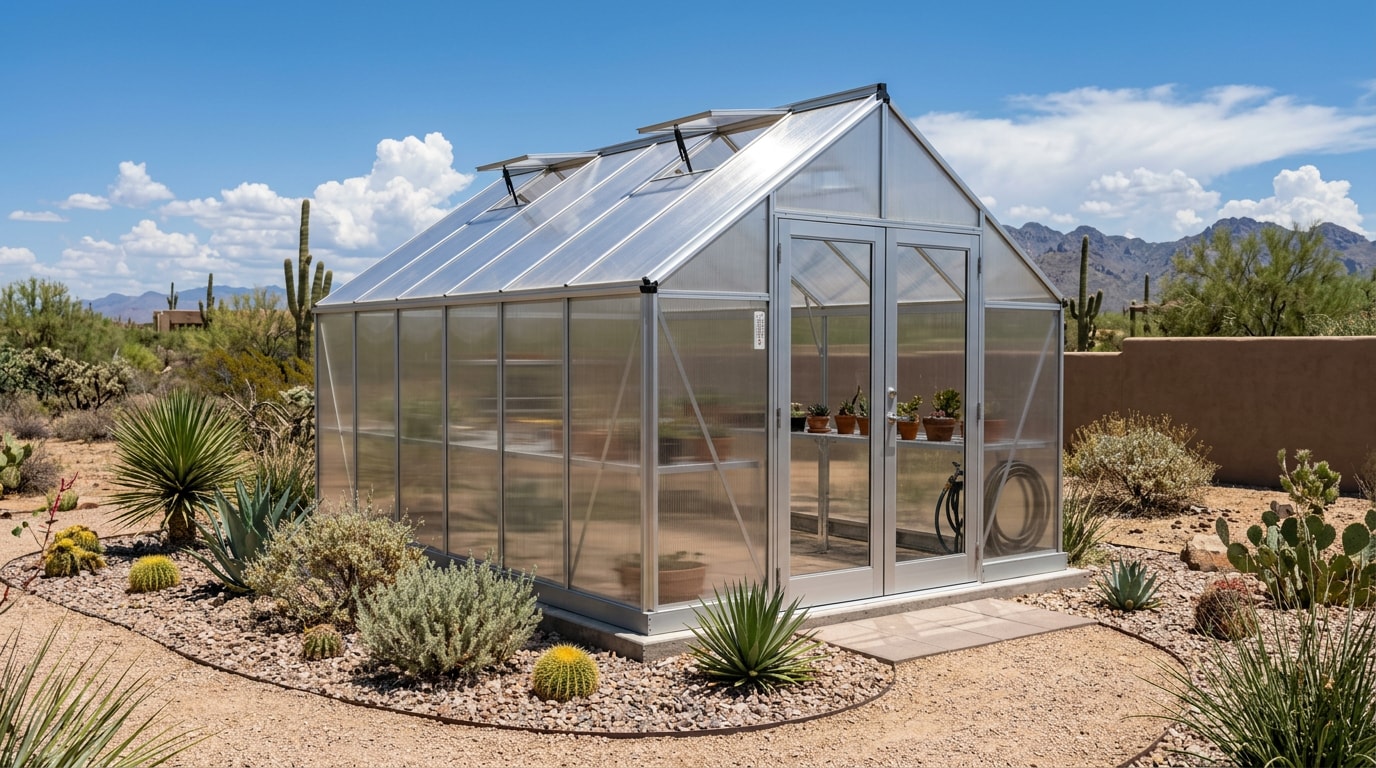
Polycarbonate has become the default recommendation for new greenhouse builds in the Valley, and the reasoning holds up. Plastic glazings include rigid plastic structured panels, such as fiberglass reinforced polyester, acrylic, polycarbonate, and polyvinyl chloride panels , and among these, polycarbonate balances light, heat, and durability better than any single competitor. We install twinwall and multiwall polycarbonate roofing sized for exactly these conditions.
| Panel Type | Typical Thickness | Light Transmission (approx.) | Relative Insulation |
|---|---|---|---|
| Solid (monolithic) polycarbonate | 2–6mm | 85–90% | Low |
| Twinwall polycarbonate | 6–10mm | 70–80% | Moderate |
| Multiwall (triple/X-wall) | 10–16mm | 55–75% | High |
Pros and Cons of Polycarbonate Roofing
- Pro: Strong, retains heat well, blocks harmful UV while letting growth light through
- Pro: Far lighter than glass, easier to handle and install
- Pro: Resists cracking from hail or wind-blown debris during monsoon season
- Con: Shorter usable lifespan than glass, generally 10 to 20 years depending on panel quality
- Con: Tends to yellow with age, gradually reducing light transmission
- Con: Thinner panels (4mm) sacrifice wind resistance and aren't a great fit for monsoon-exposed sites
Choosing panels with a strong UV-protective coating slows the yellowing process considerably, and it's the single detail we flag most often during roof inspections on greenhouses that are five-plus years old.
Light Transmission and Optical Clarity
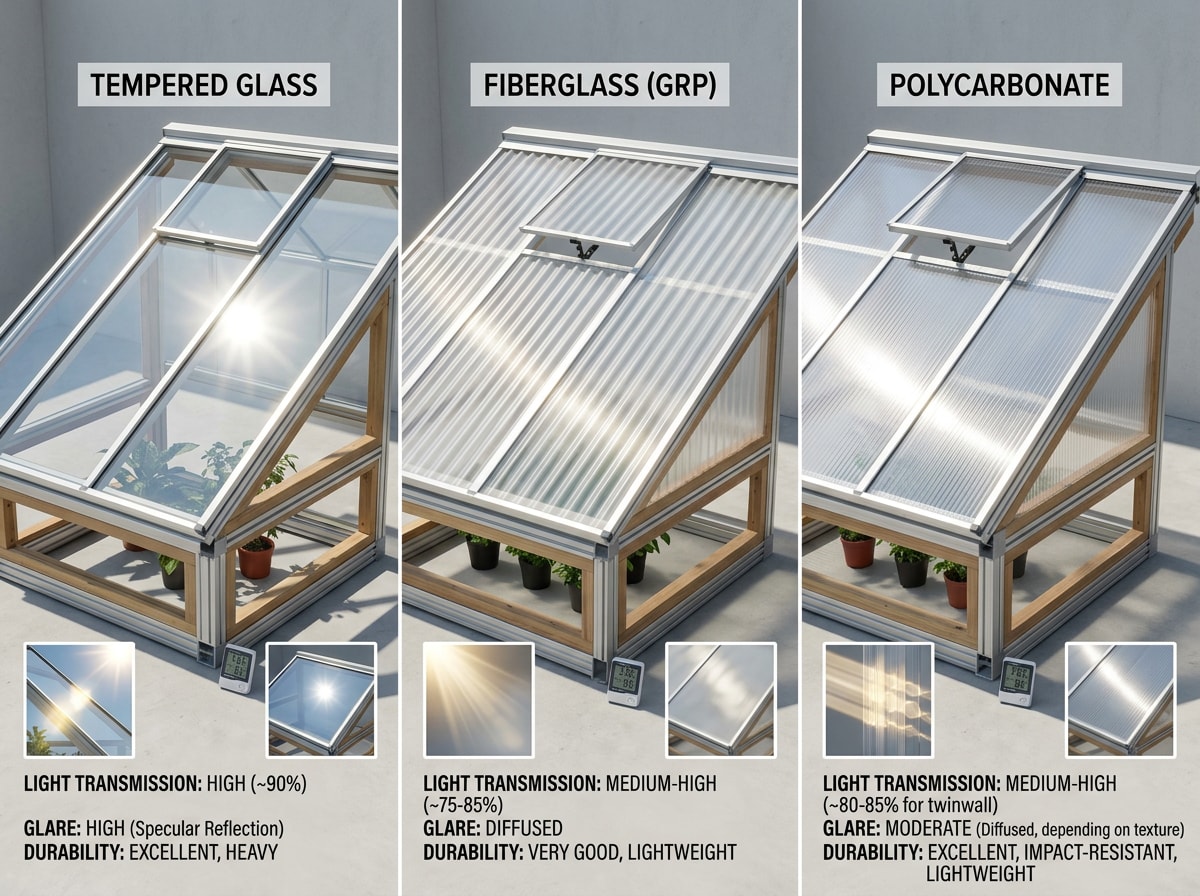
Solid polycarbonate sheets come closest to matching glass-like clarity, while multiwall versions trade some clarity for the air-pocket insulation that helps regulate interior temperature during Tempe's hottest stretches. Most horticultural guidance treats 80 to 90% transmission as the sweet spot for healthy plant growth without excess heat gain.
Strength, Insulation, and Weather Resistance
Polycarbonate is substantially stronger than glass by weight and resists cracking from wind-blown debris, a meaningful advantage during monsoon season. Exact strength multipliers vary by manufacturer and panel grade, so confirm current impact ratings with your supplier rather than relying on older marketing figures.
Multiwall panels trap air between layers, which helps hold interior heat on cool desert nights while slowing heat gain during peak summer sun. For the technical side of how greenhouse coverings compare on heat loss and structure, the University of Arizona's Controlled Environment Agriculture Center publishes detailed greenhouse covering systems research worth a look if you want the engineering behind the recommendation.
Lightweight Design and Easy Installation
Polycarbonate panels weigh meaningfully less than equivalent glass panels, which simplifies shipping, handling, and on-site installation. That lighter load also reduces stress on the greenhouse frame, which can lower overall structural costs.
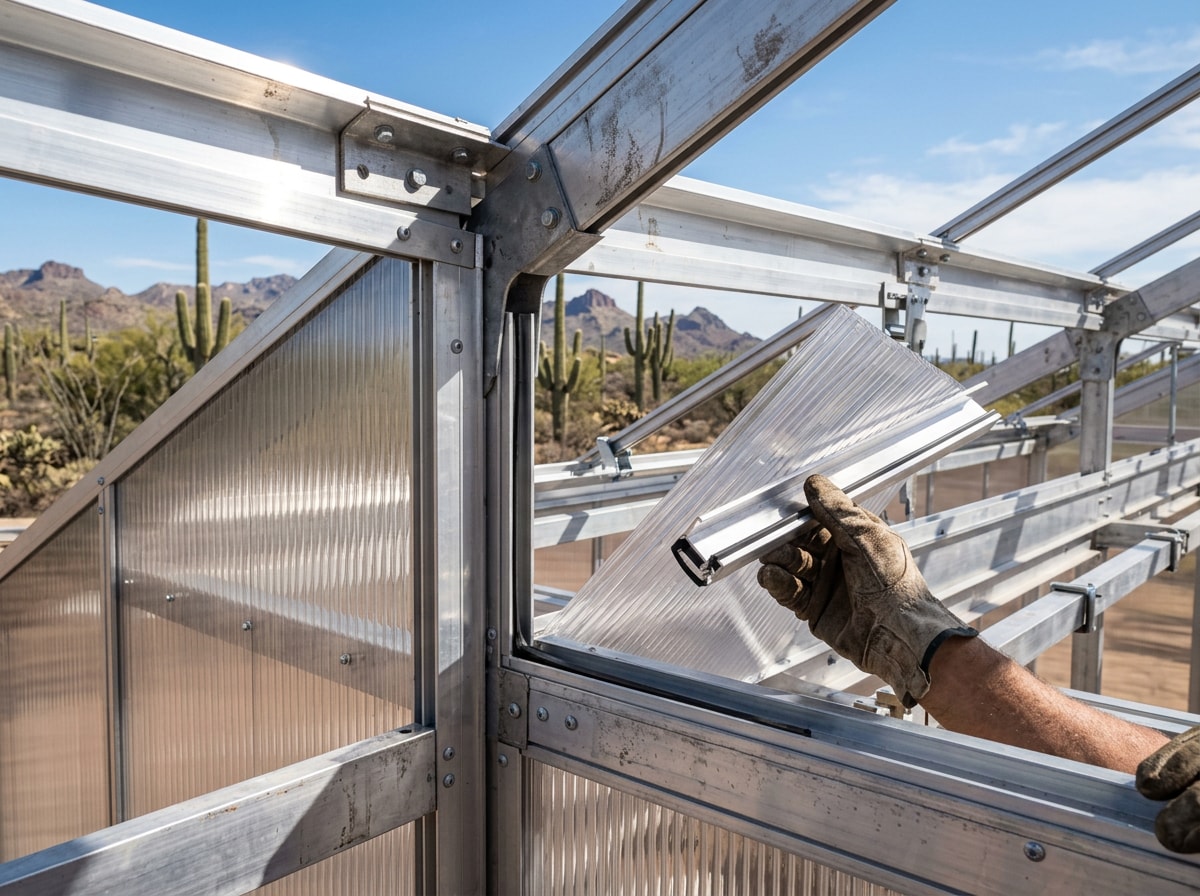
For DIY-minded owners, the reduced weight makes polycarbonate noticeably easier to work with than glass or fiberglass. Larger multiwall panels still benefit from a two-person install for a secure, wind-resistant fit, which is where most of our callbacks come from when a homeowner installed solo and the panel shifted in the first strong gust.
Types of Polycarbonate Panels: Solid vs. Multiwall vs. Corrugated
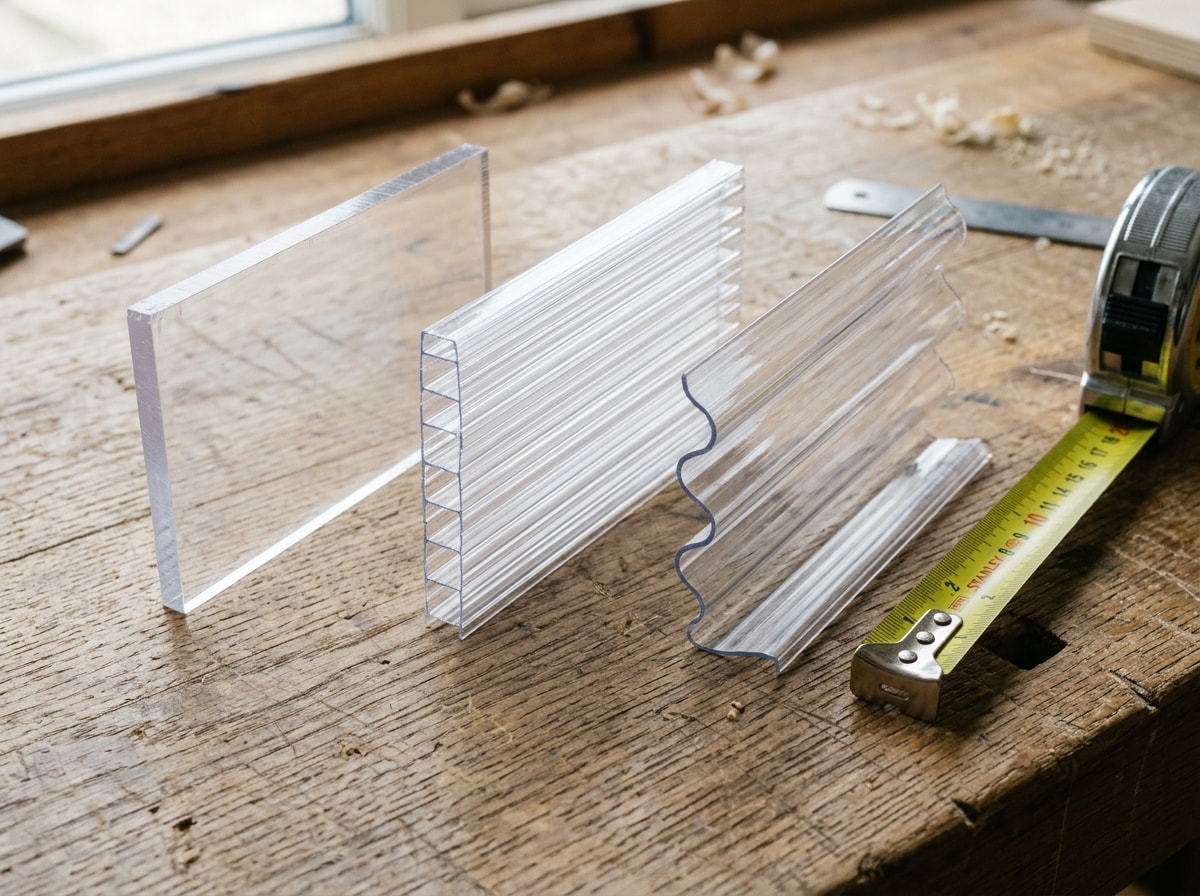
Solid polycarbonate sheets are a single clear layer, typically 2mm to 6mm thick, offering the closest light transmission to glass but less insulating value. Multiwall sheets, sold as twinwall, triple-wall, or honeycomb structures, use internal air chambers to boost insulation while staying far lighter than solid panels or glass.
Corrugated polycarbonate panels are another option, often used for simpler or lower-budget structures, though they generally offer less insulating performance than true multiwall designs.
Why Professional Installation Matters in Tempe
On every greenhouse roofing project we've handled across Tempe and the East Valley, the failure point is almost never the panel material itself, it's the framing and fastening system around it. A multiwall polycarbonate sheet rated for monsoon wind still fails if it's screwed into an undersized frame or sealed with the wrong gasket.
A few things a qualified roofing contractor should check before installation:
- Frame spacing matched to your chosen panel thickness
- Fastener type and spacing rated for local wind exposure
- Proper expansion gaps, since polycarbonate expands and contracts more than glass in heat swings
- Flashing and seal details at ridge and eave to keep monsoon rain out
If your existing greenhouse roof is already showing yellowing, sagging, or storm damage, a roof replacement is usually more cost-effective than patching old panels that have already lost most of their UV protection. Many of the same framing and attachment principles apply to awning and shade structures that growers add alongside their greenhouse for extra summer shading.
Schedule a free inspection with our team before you commit to a material, especially if you're comparing options for a commercial-scale build. The same structural considerations that apply to commercial roofing systems carry over directly, and our commercial and industrial roofing guide covers the systems-level decisions in more depth.
FAQ
What type of polycarbonate is best for greenhouses?
Twinwall polycarbonate is generally the best all-around choice, since it traps air for added insulation while still delivering high light transmission and strong impact resistance. It keeps interior temperatures more stable without blocking the sunlight plants need, which makes it a practical middle ground for Tempe growers managing both heat and monsoon wind.
How thick should polycarbonate sheets be for a greenhouse?
Most manufacturers recommend multiwall polycarbonate of at least 8mm for permanent greenhouse roofing, since thinner panels sacrifice insulation and impact resistance. In Tempe, that thickness matters more for heat control and UV stability than for the cold-weather load-bearing reasons most national guides cite.
Is polycarbonate roofing good for greenhouses?
Yes. Polycarbonate combines strength, long-term durability, and light transmission close to glass at a fraction of the weight, making it one of the most practical roofing materials for greenhouse use. It's also UV-resistant, letting beneficial sunlight through while filtering out radiation that can damage plants or degrade interior components over time.
How much does a greenhouse roof cost in Tempe, AZ?
Cost depends heavily on material and size. Polyethylene film is the cheapest upfront but needs replacing every two to four years. Polycarbonate costs more initially but typically lasts 10 to 20 years, which usually makes it the better value for anything meant to be permanent. Get a free on-site estimate for exact numbers on your structure.
How long does a greenhouse roof last in the Arizona desert?
It depends on the material and the UV coating quality. Film lasts two to four years, fiberglass around 10 to 15 years with maintenance, polycarbonate 10 to 20 years depending on panel grade, and tempered glass can exceed 20 to 40 years if the frame and seals are maintained. Regular roof inspections catch yellowing or seal failure before it turns into a bigger repair.
If you're planning a new greenhouse or replacing an aging roof anywhere in the Tempe, AZ area, our team at AIM Services Roofing can walk the site, check your frame against your panel choice, and give you a straight answer on what will actually hold up through monsoon season.