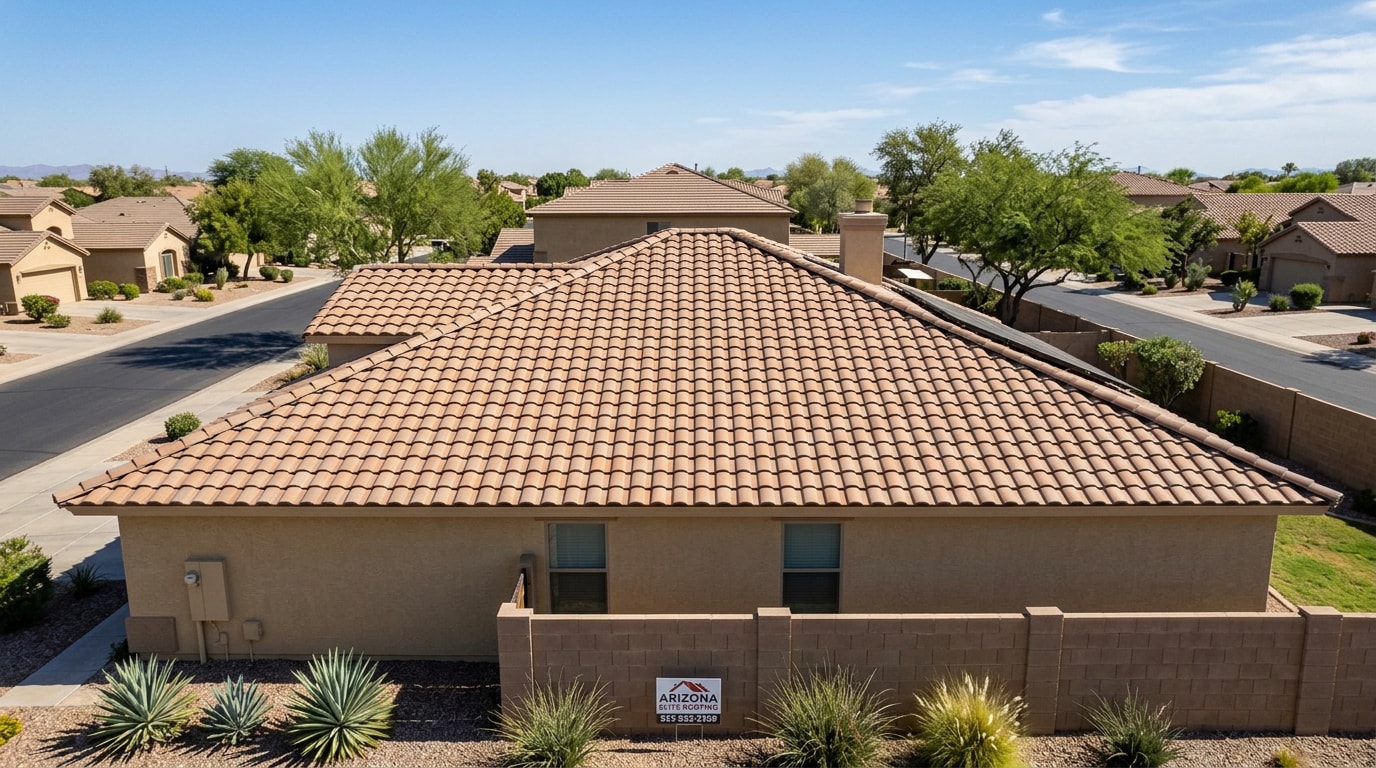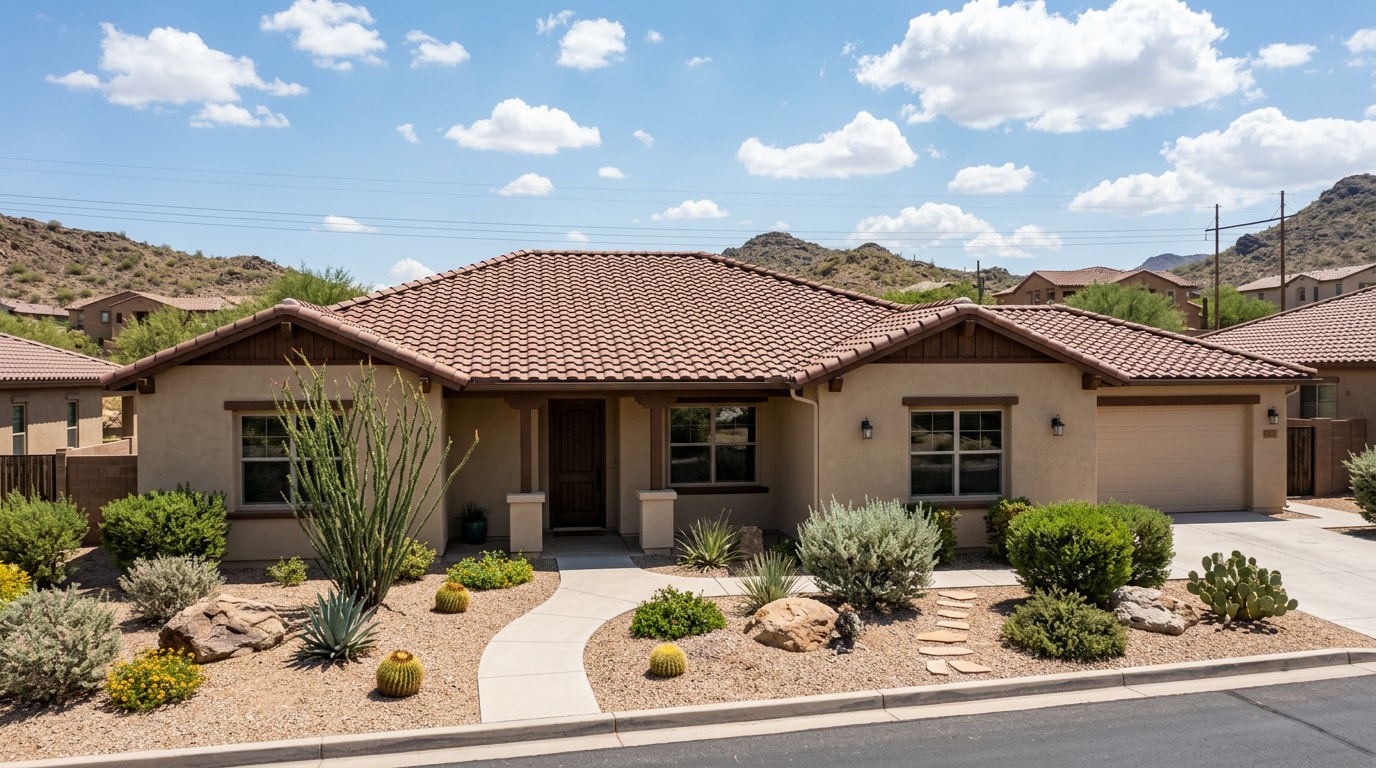
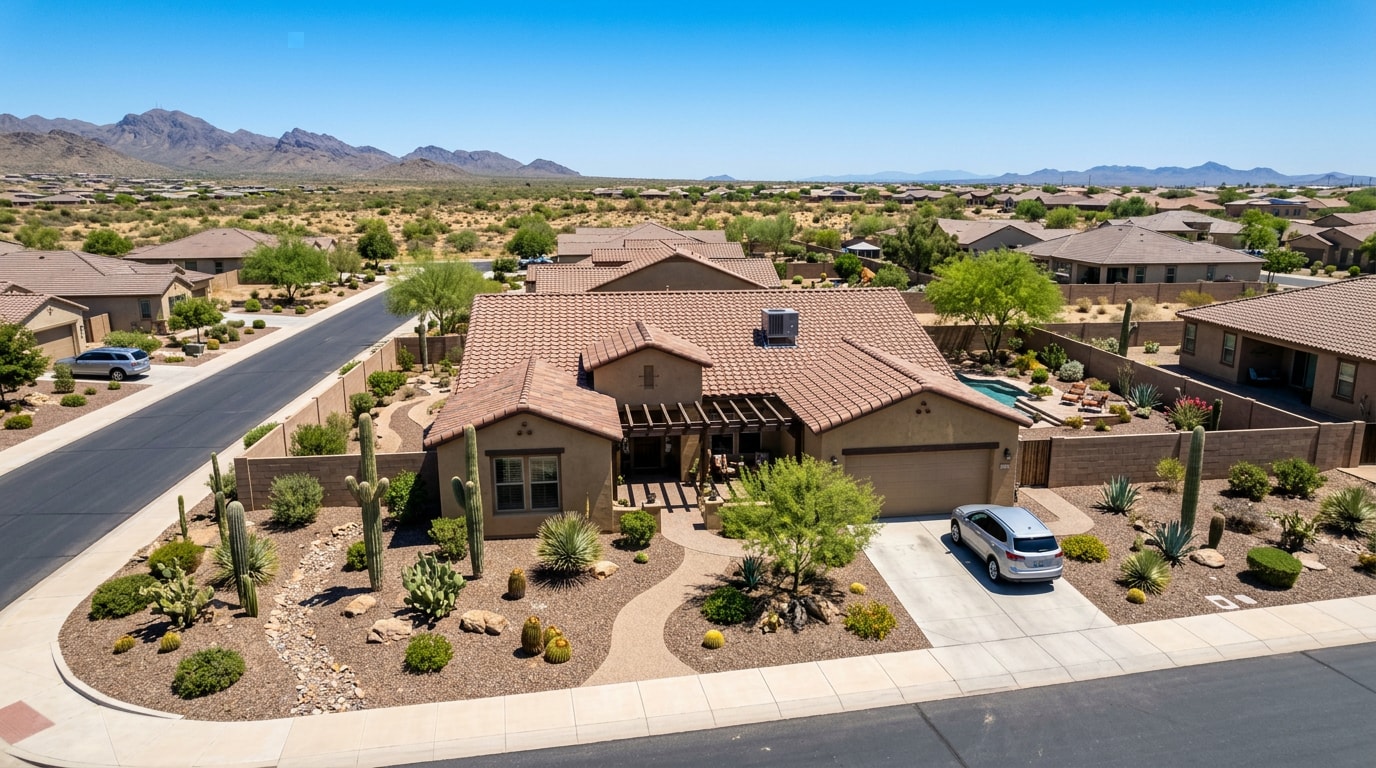
A roofing inspection checklist Maricopa, AZ homeowners can actually use has to account for one thing most national guides skip: this desert climate ages a roof on its own timeline. Triple-digit heat, relentless UV, and violent monsoon storms hit the same roof in the same year, sometimes the same week. Here's exactly what to check, from the ground up, so small problems don't turn into a replacement.
Why Maricopa's Climate Changes What You Should Check
Maricopa's desert climate pushes roofing materials through extremes most manufacturers never tested them for. Summer heat softens sealants and asphalt, intense UV breaks down protective coatings, and monsoon wind and hail stress every seam and flashing point. A consistent inspection routine catches these issues while they're still cheap to fix.
Arizona's Unique Roofing Challenges
Pinal County summers regularly push roof surface temperatures well above 150°F, and that daily expansion and contraction loosens fasteners and cracks brittle sealants faster than in milder climates.
Monsoon season adds wind gusts, hail, and sudden downpours to the mix. The National Weather Service defines Arizona's monsoon season as running officially from June 15th through September 30th . Monsoon roof damage often shows up as lifted shingles, cracked tiles, or clogged drains overwhelmed by dust that's settled all summer. Flash flooding can also expose drainage weaknesses that stayed hidden during the dry months.
What a Professional Roof Inspection Includes
A homeowner's visual checklist covers the basics, but a licensed inspector adds tools and training that catch what the naked eye misses. Professional inspections typically combine a physical walk of the roof surface with thermal imaging and, increasingly, drone photography for hard-to-reach areas.
This layered approach matters in Maricopa. Hidden roof damage, like trapped moisture under a tile roof or a slow leak above an attic, can develop for months before it ever shows up as a ceiling stain.
How Thermal Imaging and Drone Technology Catch Hidden Problems
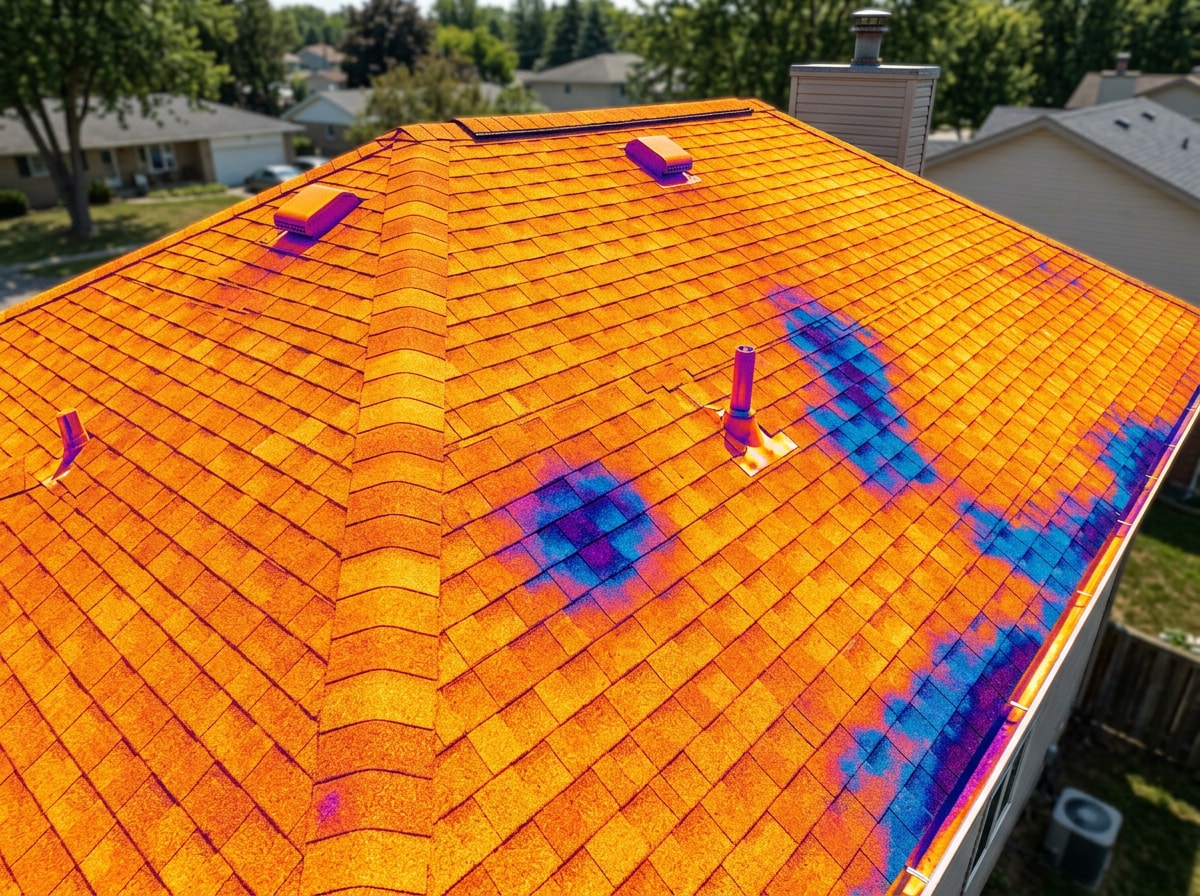
Thermal imaging works by detecting temperature differences across the roof surface. Thermography measures surface temperatures by using infrared video and still cameras, producing images that range from white for warm regions to black for cooler areas . Wet insulation and trapped moisture hold heat differently than dry materials, so an infrared scan reveals these cold spots long before any visible leak appears.
In Arizona, inspectors typically run a scan during early morning or evening hours. That's when the sun's direct heat isn't masking the subtle temperature differences they're looking for. A trained technician reads the thermal map for patches a few degrees cooler than the surrounding roof. That gap, not a dramatic color change, is usually the first sign of moisture intrusion.
Drone photography complements this by covering steep slopes, tile fields, and multi-story roofs without anyone walking the surface. For more technical background on how this works, the U.S. Department of Energy's thermographic inspections page is a solid reference. If you'd rather skip the DIY guesswork, our roof inspection services include both thermal scanning and drone photography as standard practice.
Exterior & Ground-Level Visual Inspection Checklist
This is the fastest part of any roofing inspection checklist Maricopa, AZ residents can run through. No ladder required, just a walk around the yard.
Start with the gutters and downspouts. Dust and debris accumulate quickly between monsoon storms, and a clogged gutter during a sudden downpour sends water somewhere it shouldn't go.
Next, scan the roofline itself:
- Missing, cracked, or curling shingles or tiles
- Granule buildup at the base of downspouts, a sign of shingle wear
- Flashing with lifting or cracked sealant around vents and edges
- Roofline sagging, best spotted by standing across the street and sighting along the ridge
- Soffit and fascia boards showing discoloration or separation
A seasonal gutter check helps prevent water backup during sudden monsoon downpours. If any of these issues show up, our roof repair or roof replacement team can assess severity before small problems become expensive ones.
Attic & Interior Inspection Checklist
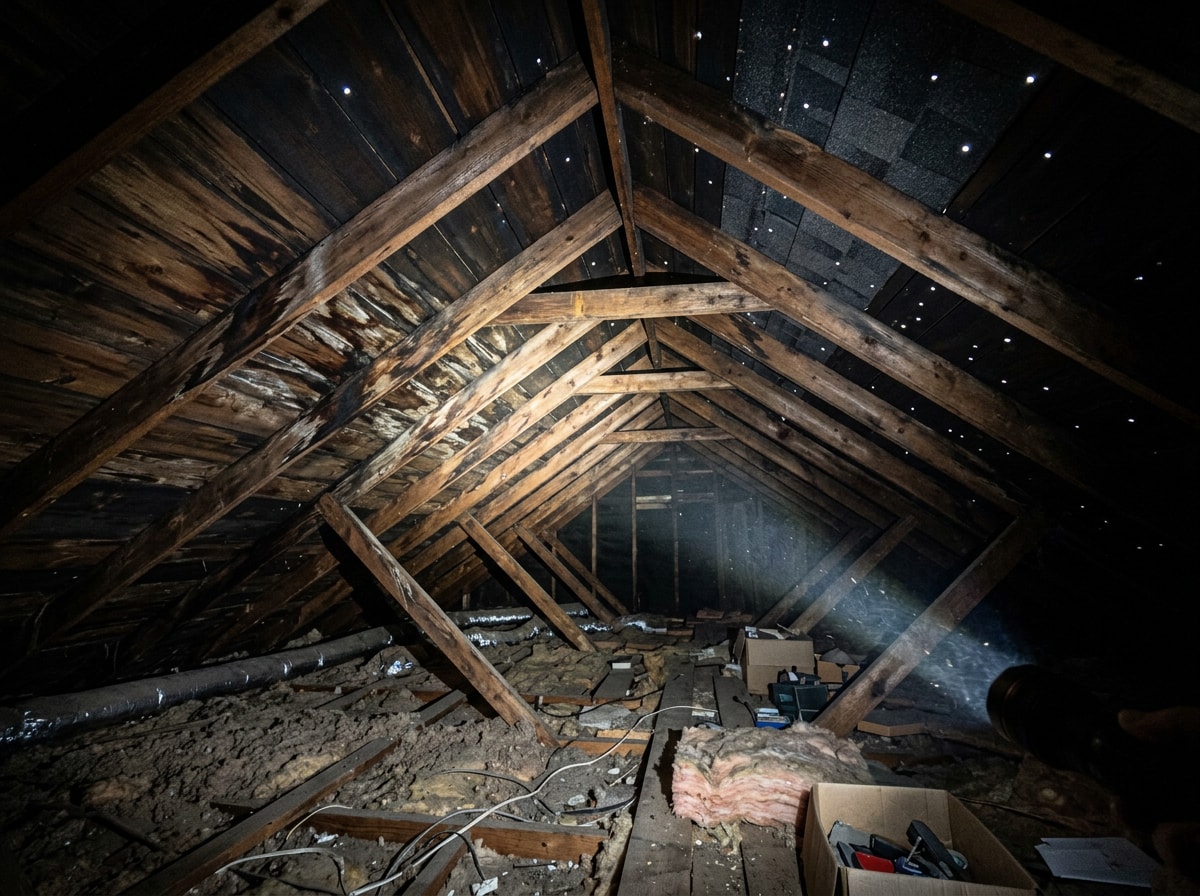
Grab a flashlight and head into the attic. This is where the earliest warning signs usually appear, often months before any exterior damage is visible.
Look up at the underside of the roof deck for pinpricks of daylight. These indicate gaps in the sheathing that let in dust, heat, and eventually water.
Check rafters and decking for moisture staining or discolored wood, both signs of a slow leak. Damp, compressed, or discolored insulation points to the same problem. While you're up there, note whether vents appear blocked or undersized. Proper attic ventilation matters because trapped heat in Arizona attics can reach well over 150°F, stressing shingles from underneath. Pest droppings or chewed insulation are also worth flagging for a professional.
On-the-Roof Surface Inspection (Shingles, Tile & Flashing)
This step is only for homeowners comfortable and properly equipped to be on the roof. If there's any doubt, skip straight to calling a professional, covered later in this guide.
For those who do go up, a thorough surface inspection focuses on a handful of trouble spots. Check ridge and valley lines for separation, inspect every pipe boot for cracking around the rubber collar, and look for hairline cracks across the tile field.
A simple sealant test helps too: press a thumbnail into exposed sealant. If it crumbles instead of giving, it's gone brittle from UV exposure. Finally, a careful flashing check around chimneys, walls, and HVAC curbs often catches the leak source before it ever reaches the attic.
Maintenance Guidelines by Roof Material
Maricopa's housing stock mixes shingle, tile, and flat or foam roofing, and each material ages differently under desert conditions. Knowing which issues matter most for your specific roof type makes inspections faster and more useful.
Shingle and Composite Material Care
Heat damage on shingles shows up as curling edges, blistering, or brittle, cracked surfaces after repeated summer exposure. Granule loss is especially common under Arizona's intense UV, and bare spots accelerate aging. Shingle maintenance in Arizona also includes checking for wind-lifted edges after monsoon storms and confirming attic ventilation supports energy efficiency.
Tile Roof Maintenance (Clay and Concrete)
Tile roofs handle Arizona heat well but aren't maintenance-free. A regular inspection should check for cracked or displaced tiles, since even a single broken tile exposes the underlayment beneath. Clear dust and debris buildup from valleys where it tends to collect, and watch for signs of seasonal expansion and contraction around ridge caps.
Because the underlayment condition beneath a concrete or clay tile roof isn't visible without lifting tiles, a professional check every few years is worth the investment. Browse our tile roofing options if cracked or missing tiles keep showing up on your checklist.
Comprehensive Seasonal Roof Inspection Checklist (Quick Reference)
Use this as a quick seasonal reference. Save it, print it, or run through it before and after monsoon season each year.
| Area | What to Check |
|---|---|
| Attic Inspection | Daylight gaps, moisture staining, damp insulation, ventilation blockage |
| Gutter Drainage | Clogs, dust buildup, downspout flow, granule accumulation |
| Flashing and Sealants | Cracked sealant, lifted edges around vents and chimneys |
| Shingle and Tile Check | Curling, cracking, missing pieces, granule loss |
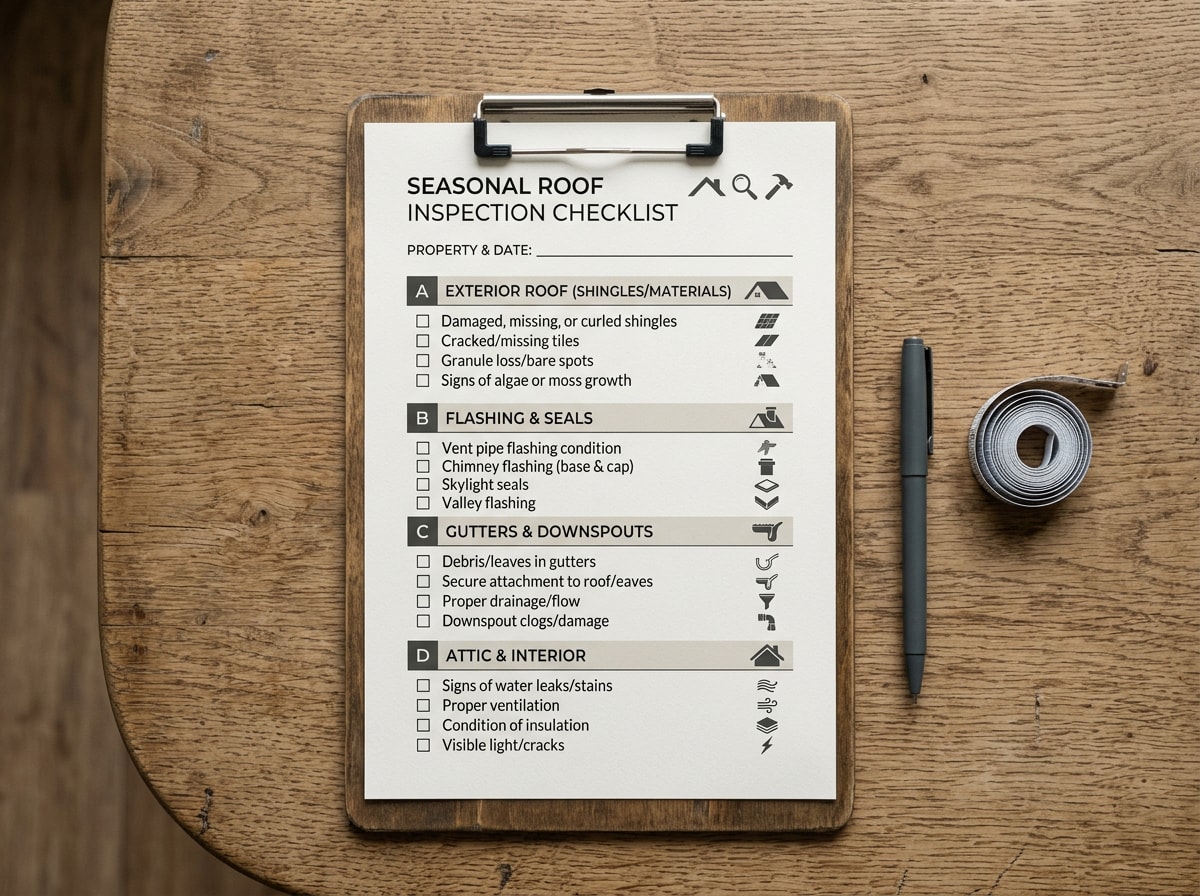
Keep this checklist on your phone or print a copy for the garage. It's the fastest way to catch problems between full professional inspections.
Professional vs. DIY Maintenance: What Arizona Homeowners Should Know
Not every roofing task belongs to the homeowner. Knowing where the line sits between safe self-checks and jobs that need a licensed roofer protects both your safety and your roof's warranty.
Safe DIY Maintenance Tasks
Ground-level roof checks, gutter cleaning, interior attic inspections, and basic debris removal are all reasonable DIY tasks for most homeowners. Avoid walking on tile or low-slope roofs during extreme heat or right after storms, since both tiles and roofing cement become more fragile and slippery than usual.
When to Call a Professional
Any attic moisture, sagging roofline, or widespread tile damage you find should prompt a call to a professional. This is especially true if the underlayment is 18 years or older, since it's likely nearing the end of its service life regardless of surface appearance.
Structural concerns, anything near electrical or HVAC equipment, and insurance documentation after storm damage all fall outside safe DIY territory. Local permit requirements can also apply to roofing work. Construction permits in the City of Maricopa are issued after review and approval of construction plans, and an electronic permit application must be submitted to the city before beginning any construction project . Check with the City of Maricopa Development Services department before starting a major repair or re-roof.
What to Do If Your Inspection Turns Up Storm Damage
If a post-monsoon check turns up lifted shingles, cracked tiles, or a water stain that wasn't there before August, don't wait on it. Storm damage tends to get worse with the next dust storm or downpour, not better. Our storm damage restoration team documents damage the same way an adjuster needs to see it.
If you're filing a claim, our insurance claim assistance service handles the paperwork and adjuster meetings so you're not doing it alone. Homeowners in neighboring Chandler deal with the same monsoon-driven claims process. Our guide to roofing insurance claims after storm damage walks through what an adjuster looks for and how to avoid a denied claim.
In the field, the pattern we see across Maricopa and the rest of Pinal County is consistent: roofs that get a real inspection before and after monsoon season rarely end up needing emergency repairs mid-storm. The ones that skip it usually call us during a downpour instead. AIM Services Roofing schedules free inspections for homeowners throughout the area, and our completed projects page shows the kind of work that follows when a checklist catches a problem early.
FAQ
How often should I inspect my roof in Arizona's climate?
Check your roof visually once a month and schedule a professional inspection twice a year, ideally before and after monsoon season, to catch Arizona-specific wear before it becomes costly.
Can I perform roof maintenance myself in Arizona, or should I hire professionals?
Ground-level and attic checks are safe DIY tasks. Anything involving walking the roof surface, structural concerns, or underlayment age should go to a licensed professional for safety and warranty reasons.
How much does a roof inspection cost in Maricopa, AZ?
Professional inspections commonly run in the low hundreds of dollars, though many local roofers offer a free inspection when it's tied to a repair estimate. Schedule a free inspection to get a current quote for your roof type and size.
When should I get my roof inspected in Maricopa, AZ?
Schedule inspections before and after monsoon season, immediately following any major storm with wind or hail, and before buying or selling a home to avoid surprises during closing.
Do I need a permit for roof repair or replacement in Maricopa, AZ?
Most re-roofing and major repair work requires a permit through the City of Maricopa's Development Services department. Minor repairs like resealing flashing or replacing a handful of shingles typically don't, but it's worth a quick call to confirm before work starts.